


The journey of home ownership in Singapore often leads to a resale HDB flat, a choice that comes with a unique set of challenges and immense potential. Unlike a brand-new BTO, an older flat is a blank canvas with a history, often requiring a complete overhaul to shed its dated look and structural wear-and-tear. This comprehensive Resale HDB Renovation Guide is designed to help you navigate the complexities of transforming your older flat into a modern, serene sanctuary.
We will walk you through the crucial steps, from understanding the non-negotiable HDB regulations and budgeting for the higher costs of an Older Flat Renovation, to embracing modern design philosophies like Japandi and Wabi-sabi, styles perfectly suited for creating a tranquil space in the heart of Singapore.
Table of Contents
1.The Crucial First Step: Understanding HDB Renovation Rules
•Structural Integrity and Hacking Permits
•Wet Areas and Floor/Wall Finishes
•Renovation Timeline and Working Hours
2.Budgeting for Your Resale HDB Transformation
•The Resale Cost Premium
•Detailed Cost Breakdown
•Smart Budget Allocation
3.Design Philosophy: Transforming Old into Modern Serenity
•The Japandi Aesthetic: Minimalist Harmony
•Wabi-sabi: Embracing Imperfection and Authenticity
•Interior Diary’s Expertise in Japandi and Wabi-sabi
4.Step-by-Step Resale HDB Renovation Process
•Step 1: Planning and Design (The ID Diary Difference)
•Step 2: Demolition and Hacking
•Step 3: Wet Works (Plumbing, Electrical, Masonry)
•Step 4: Carpentry and False Ceilings
•Step 5: Painting and Final Touches
•Step 6: Cleaning and Handover
5.Conclusion and Call-to-Action
1. The Crucial First Step: Understanding HDB Renovation Rules


Renovating in Singapore means adhering to the strict guidelines set by the Housing & Development Board (HDB). For a resale flat, these HDB renovation rules are even more critical, as you are dealing with an existing structure that may have undergone previous, potentially unapproved, modifications. Ignoring these regulations can lead to costly rework, fines, or, in the worst case, compromise the structural integrity of the building.
Structural Integrity and Hacking Permits
The most important rule for any Resale HDB Renovation Guide is the need for HDB’s prior approval before any demolition or hacking of walls, whether partial or full. This is a mandatory safety requirement to ensure the structural integrity of the entire block is maintained.
“You and your HDB licensed contractor must obtain HDB’s prior approval before starting any demolishing and/ or hacking of walls, whether partially or fully. This mandatory requirement protects residents’ safety, as unauthorised demolishing and/ or hacking of walls may affect the structural integrity of the building.”
Your interior designer or contractor must be an HDB Licensed Contractor who is familiar with the submission process. They will be responsible for submitting the online renovation application to HDB on your behalf. Never attempt to hack any wall without this official permit.
Wet Areas and Floor/Wall Finishes
Older HDB flats often have original floor and wall tiles that are due for replacement. While BTO flats have a three-year restriction on hacking the original tiles in wet areas, resale flats typically do not. However, when renovating bathrooms and kitchens, waterproofing is paramount.
When replacing floor tiles in wet areas, the contractor must ensure that the new waterproofing membrane is properly installed and cured to prevent leakage to the unit below. This is a common area of concern in Older Flat Renovation projects and requires careful attention to detail and adherence to HDB’s standards for wet works.
Renovation Timeline and Working Hours
To minimize inconvenience to your neighbors, HDB imposes strict limits on the duration and timing of noisy works. The maximum period for renovation works in a resale flat is typically three months from the date of HDB’s approval letter.
Furthermore, noisy works, such as hacking and drilling, are only permitted during specific hours on weekdays. Your contractor must display the HDB permit outside your flat, which details the approved works and the permitted working hours. Maintaining good relations with your neighbors by adhering to these rules is a vital, often overlooked, part of the HDB Renovation Singapore process.
2. Budgeting for Your Resale HDB Transformation
One of the biggest differences between renovating a BTO and a resale flat is the cost. The HDB renovation cost Singapore for a resale unit is almost always higher due to the necessity of undoing the past before creating the future.
The Resale Cost Premium
For a BTO, the renovation is primarily about adding new fixtures and finishes. For a resale flat, the process begins with demolition and haulage, which can account for a significant portion of the budget. You must factor in the cost of tearing down old built-in cabinets, hacking old tiles, and disposing of the debris.
More importantly, for an Older Flat Renovation, it is highly recommended to replace the entire electrical wiring and plumbing system. These hidden systems are often past their lifespan and replacing them now is a non-negotiable investment in your home’s safety and longevity, preventing costly issues down the road.
Detailed Renovation Cost Breakdown
While costs vary widely based on the flat size, age, and the complexity of the design, here is an estimated breakdown for a typical 4-room resale HDB flat in Singapore. These figures are for contractor-level work and exclude furniture and appliances, which can add another $10,000 to $30,000+ to the total budget.
| Renovation Component | Estimated Cost Range (SGD) | Notes |
| Demolition & Haulage | $8,000 – $15,000 | Essential for resale; includes hacking of floors, walls, and built-ins. |
| Masonry & Tiling | $15,000 – $25,000 | Includes screeding, waterproofing, and laying new tiles for bathrooms, kitchen, and living areas. |
| Electrical Works | $6,000 – $12,000 | Rewiring the entire flat is recommended for older units. |
| Plumbing Works | $4,000 – $8,000 | Replacement of old pipes and sanitary fittings. |
| Carpentry (Kitchen/Wardrobes) | $15,000 – $30,000 | Custom cabinets are a major cost driver but essential for space optimization. |
| Painting & Finishing | $3,000 – $6,000 | Includes wall preparation and specialized finishes like limewash. |
| Design & Project Management Fees | $5,000 – $10,000 | Fees for the Interior Designer/Project Manager. |
| Total Estimated Renovation Cost | $56,000 – $106,000+ | The average cost for a comprehensive 4-room resale HDB renovation is around $67,000 13. |
Smart Budget Allocation
Given the high costs, smart budgeting is key. Prioritize the essential, non-negotiable works first: plumbing, electrical, and structural changes. These are the elements that are difficult and expensive to fix once the renovation is complete. Aesthetics, while important, should come second.
If you require financial assistance, you can explore renovation loans offered by various banks in Singapore. These loans typically cover up to six times your monthly salary or $30,000, whichever is lower, and are specifically designed to help homeowners manage the significant HDB renovation cost Singapore.
3. Design Philosophy: Transforming Old into Modern Serenity
The true transformation of an older HDB flat lies in the design philosophy you choose. To create a modern, timeless, and tranquil home, many Singaporean homeowners are turning to the Japanese-inspired aesthetics of Japandi and Wabi-sabi. These styles are particularly effective in HDB settings, as they emphasize simplicity, natural light, and an uncluttered environment, making small spaces feel expansive and calm.
The Japandi Aesthetic: Minimalist Harmony


Japandi is a harmonious blend of Japanese minimalism and Scandinavian functionality. It takes the clean lines and serene simplicity of Japanese design and marries it with the cozy warmth and practicality of Nordic style.
•Key Elements:
•Color Palette: A muted, neutral base of white, beige, light grey, and cream.
•Materials: Light-toned wood (like ash or birch), natural fibers (linen, cotton, wool), and matte finishes.
•Form: Clean, simple lines in furniture and architecture, prioritizing function over ornamentation.
•Atmosphere: Serene, uncluttered, and highly functional.
A Japandi HDB focuses on maximizing natural light and creating a seamless flow between spaces. Built-in storage is cleverly concealed to maintain the minimalist look, and furniture is chosen for its craftsmanship and utility. This style is a perfect antidote to the visual noise of city life, offering a peaceful retreat within your flat.
Wabi-sabi: Embracing Imperfection and Authenticity

Wabi-sabi is a deeper, more philosophical aesthetic rooted in the Japanese appreciation of imperfection (wabi) and the beauty of age and wear (sabi). It is about finding beauty in the authentic, the transient, and the natural world.
•Key Elements:
•Color Palette: Earthy, organic tones—think terracotta, moss green, charcoal, and deep browns.
•Materials: Raw, unfinished, and textured materials. Examples include limewash or textured paint on walls, exposed cement screed, aged wood, and hand-thrown ceramics.
•Form: Organic shapes, asymmetry, and a preference for items that show their age and history.
•Atmosphere: Rustic, authentic, and deeply calming.
For an Older Flat Renovation, Wabi-sabi is a powerful choice because it doesn’t try to mask the flat’s age. Instead, it celebrates the history of the structure. A slightly uneven wall finish or a piece of furniture with a visible grain is seen as beautiful, not flawed. This style encourages a slower, more mindful way of living, which is a growing trend in HDB Renovation Singapore.
Interior Diary’s Expertise in Japandi and Wabi-sabi
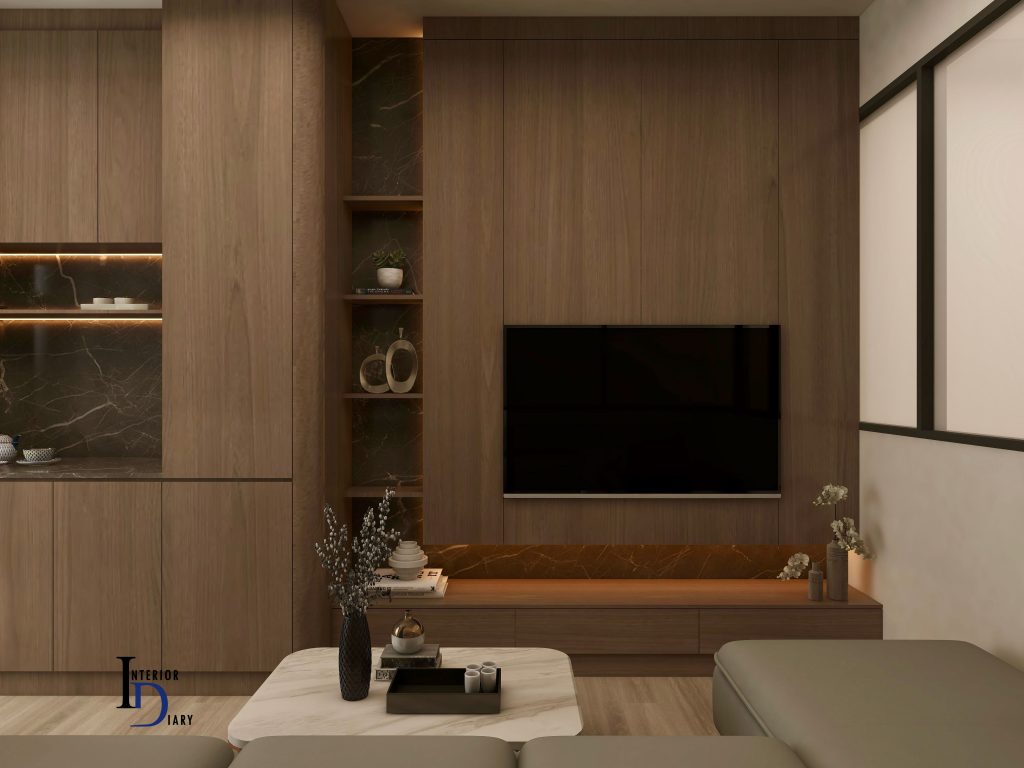
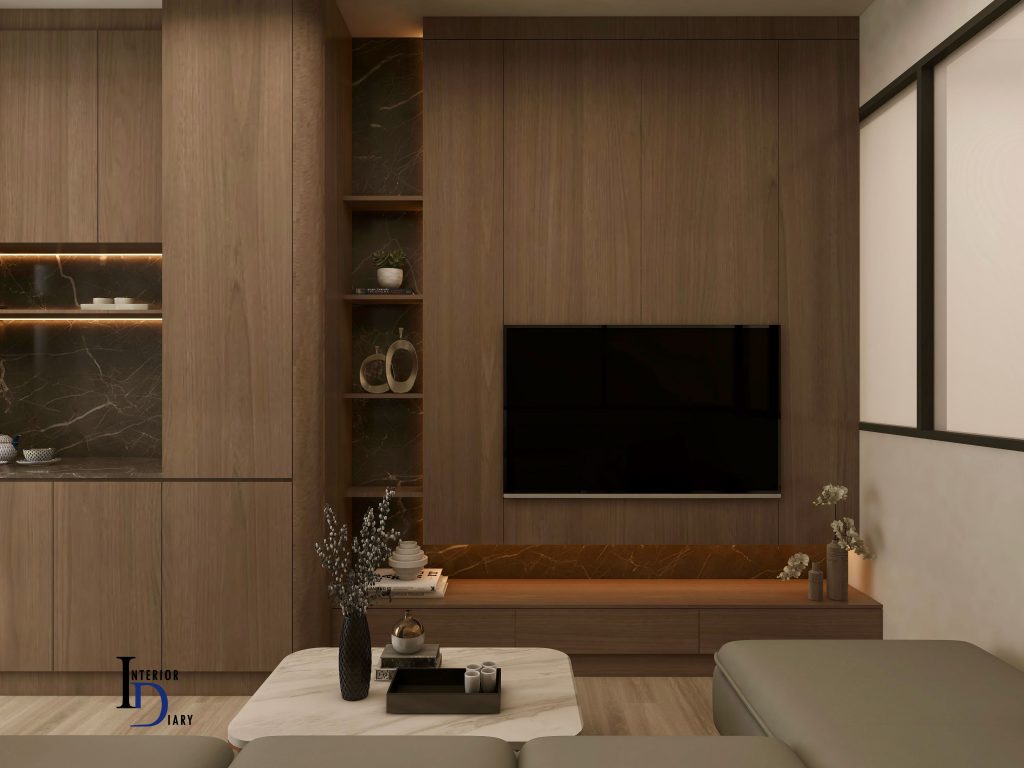

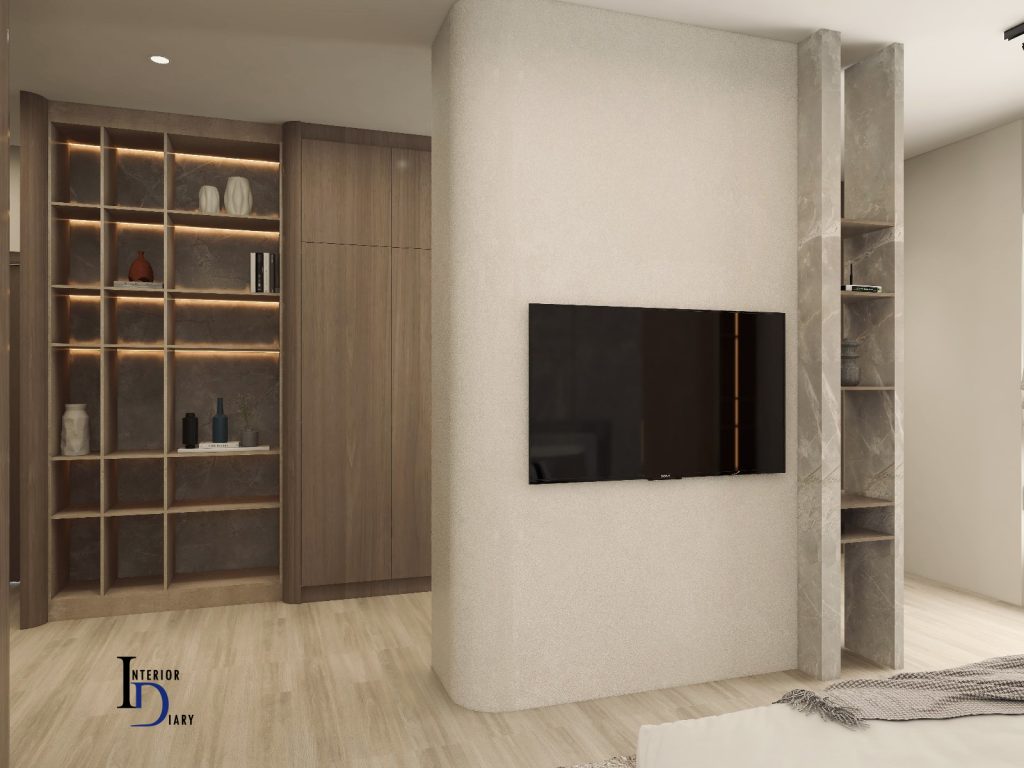
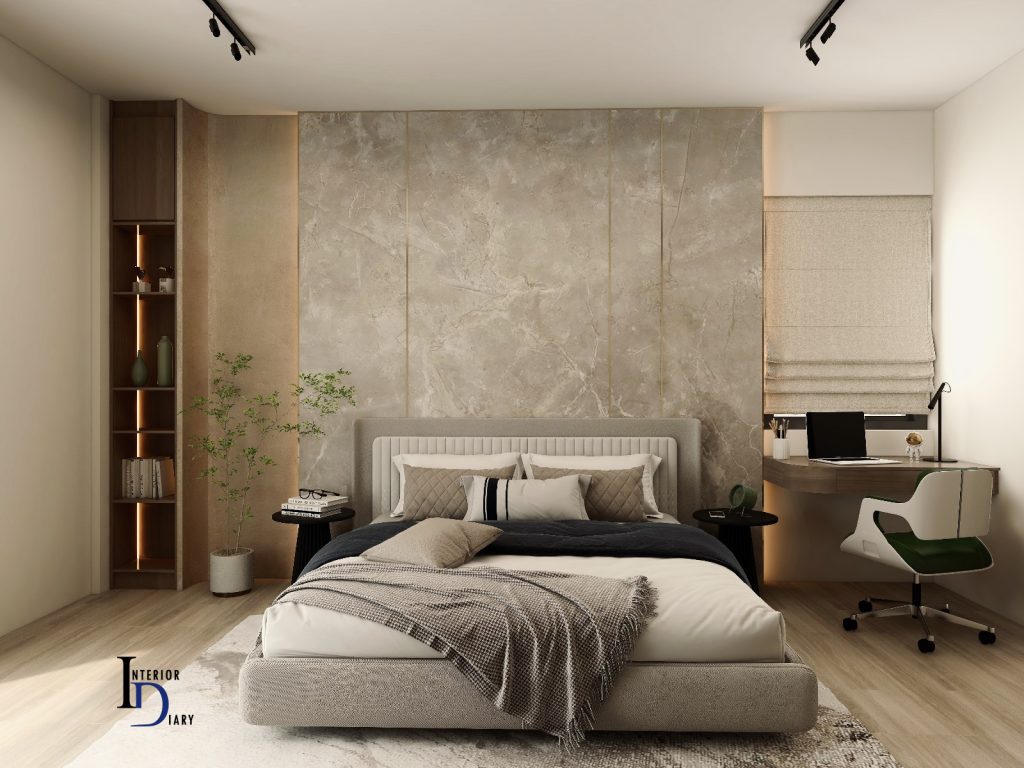
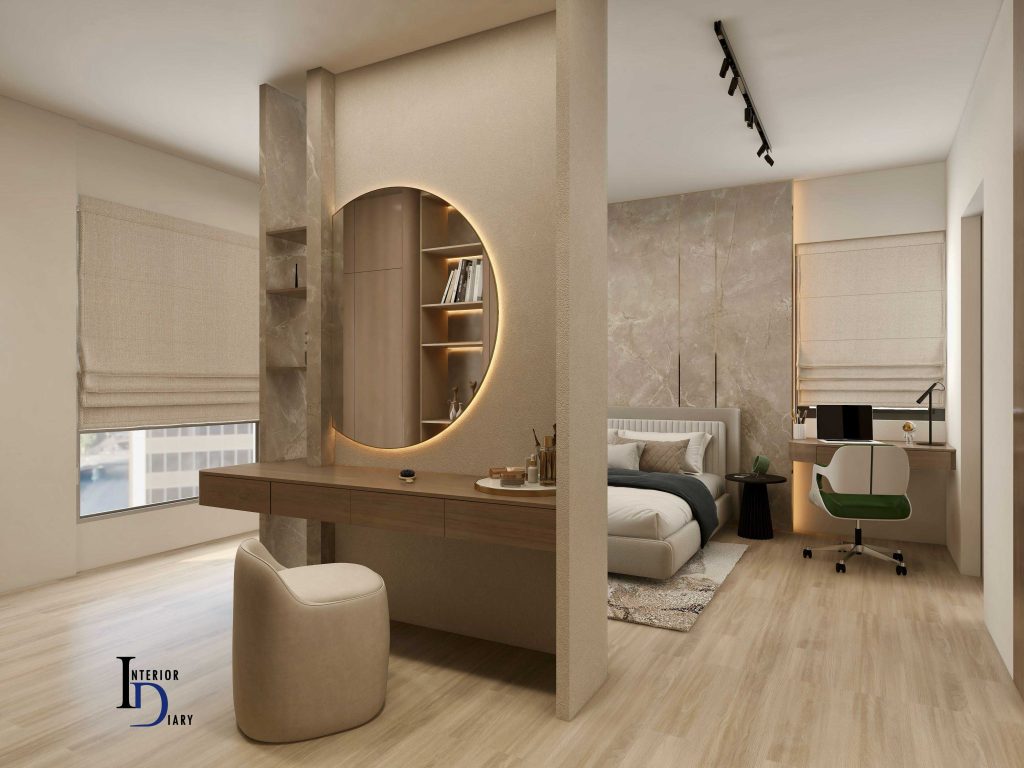
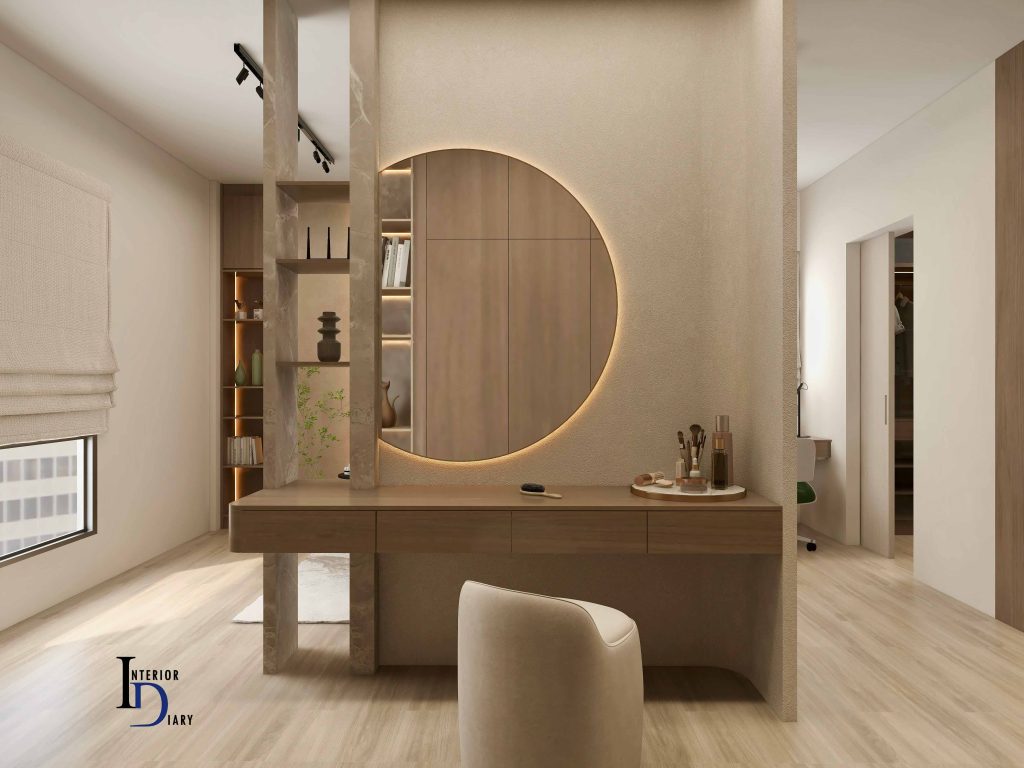


At Interior Diary, we specialize in translating the tranquil philosophies of Japandi and Wabi-sabi into practical, beautiful, and HDB-compliant designs. We understand that these styles are not just about aesthetics; they are about creating a lifestyle.
Our approach to a Japandi HDB focuses on bespoke carpentry that maximizes storage without sacrificing the clean, minimalist look. We carefully select light wood laminates and neutral tones that thrive in the tropical Singapore climate.
For Wabi-sabi interior design Singapore, we excel at incorporating textured finishes, such as micro-cement or limewash, that add depth and character while adhering to HDB’s material guidelines. We believe that an Older Flat Renovation is an opportunity to infuse your home with a sense of history and authenticity, using the Wabi-sabi principle to create a truly unique space. Our expertise ensures that your design vision is realized seamlessly, from the initial HDB permit application to the final, perfect imperfection of your new home.
4. Step-by-Step Resale HDB Renovation Process

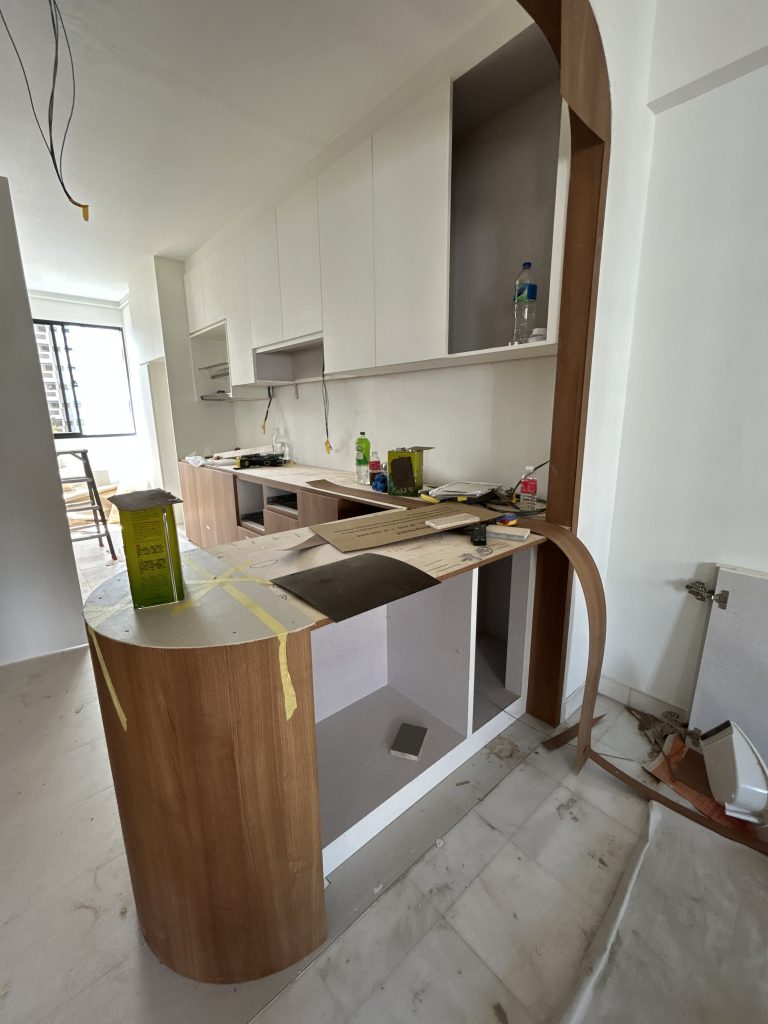
The process of renovating a resale flat is complex and requires meticulous planning and execution. Here is a chronological guide to the steps involved in your Resale HDB Renovation Guide journey.
Step 1: Planning and Design (The ID Diary Difference)
This is the most critical phase. Before any physical work begins, you must finalize your design, materials, and layout.
•Engaging an ID: A professional interior designer, especially one specializing in Older Flat Renovation like Interior Diary, will help you translate your vision into a technical plan. They will advise on the feasibility of structural changes and manage the entire HDB permit submission process.
•Layout Finalization: Resale flats often have older, less efficient layouts. This is the time to decide on major changes, such as open-concept kitchens (if permitted by HDB) or combining rooms to create a larger master suite.
•Material Selection: Choosing the right materials is key to achieving the Japandi or Wabi-sabi look. Focus on quality, durability, and natural textures.
Step 2: Demolition and Hacking
Once the HDB permit is approved, the noisy work begins. This phase is unique to resale flats and involves stripping the unit back to its bare shell.
•Tearing Down: Old built-in wardrobes, kitchen cabinets, floor tiles, and any non-structural walls are removed.
•Haulage: All debris must be properly disposed of, a service your contractor will manage.
•Inspection: After hacking, the contractor will inspect the remaining structure for any unforeseen issues, which is common in an Older Flat Renovation.
Step 3: Wet Works (Plumbing, Electrical, Masonry)
This is the foundation of your new home and the most crucial phase for long-term durability.
•Plumbing and Electrical: New pipes and electrical wiring are laid out according to the finalized plan. New air-conditioning trunking is also installed at this stage. This is a vital part of the HDB Renovation Singapore process for older units.
•Waterproofing: New waterproofing membranes are applied to the kitchen and bathrooms. This must be done correctly to prevent future leaks.
•Tiling: Floor and wall tiles are laid. For a Wabi-sabi interior design Singapore look, this is where textured tiles or micro-cement finishes are applied.
Step 4: Carpentry and False Ceilings
With the wet works complete, the focus shifts to the interior architecture and storage solutions.
•False Ceilings: Installed to conceal electrical wiring, air-conditioning pipes, and to incorporate recessed lighting, a key feature in minimalist Japandi design.
•Custom Carpentry: Kitchen cabinets, wardrobes, and storage units are installed. For a Japandi HDB, this carpentry is often handle-less and flush, maintaining clean lines and maximizing the limited HDB space.
Step 5: Painting and Final Touches
The flat now begins to look like a home.
•Painting: Walls are painted with the chosen neutral palette. For a Wabi-sabi feel, specialized paints like limewash are applied to create a subtle, textured finish.
•Fittings: Light fixtures, sanitary fittings, power sockets, and switches are installed.
•Flooring: If not tiled, wood or vinyl flooring is laid in the living areas and bedrooms.
Step 6: Cleaning and Handover
The final stage involves a thorough cleaning of the entire flat, followed by the final inspection and handover from the contractor. This is when you can finally (!) move in and begin furnishing your newly Transform older HDB flat.
FAQ
A full renovation for a 4-room resale HDB flat in Singapore typically costs between $56,000 and $106,000, with the average sitting around $67,000. This is significantly higher than a BTO renovation because resale flats require demolition of old fixtures, complete re-tiling, and in most cases a full replacement of the electrical wiring and plumbing. The final cost depends on the age of the flat, the scope of hacking, and your choice of materials and carpentry.
Resale HDB renovations cost more because you are starting with an existing structure that needs to be stripped before anything new can go in. This means paying for demolition and haulage of old tiles, cabinets, and built-ins, which BTO owners do not need to do at all. On top of that, older flats almost always require the full electrical wiring and plumbing to be replaced, as these systems are often past their safe lifespan. These two items alone can add $10,000 to $25,000 to the total budget compared to a comparable BTO renovation.
It is strongly recommended. For resale flats that are 20 years old or more, the original electrical wiring and plumbing pipes are likely approaching or past their expected lifespan. Replacing them during the renovation is much cheaper than doing it after you have moved in, as the walls and floors are already opened up at that point. Skipping this step to save money upfront is one of the most common mistakes resale flat buyers make, and it often leads to costly repairs and disruption later on.
A resale HDB renovation typically takes 3 to 5 months from start to finish, which is longer than a BTO renovation due to the additional demolition and hacking phase at the start. HDB also caps the renovation works period at three months from the date of permit approval, so proper planning before the permit is submitted is essential. Delays most commonly come from late decisions on carpentry designs or materials, so it helps to finalise those choices before work begins.
5. Conclusion
The decision to undertake a Resale HDB Renovation Guide is a significant one, but the reward is a home that is not only structurally sound and compliant with HDB regulations but also perfectly tailored to your modern lifestyle. By understanding the unique challenges of an Older Flat Renovation, from the higher HDB renovation cost Singapore to the need for structural permits, you can approach the project with confidence.
The transformation from a tired, dated flat to a modern, serene sanctuary is a journey best guided by a professional. The timeless elegance of Japandi HDB and the authentic, calming nature of Wabi-sabi interior design Singapore offer the perfect design blueprint for a tranquil Singapore home.
Ready to Transform your older HDB flat into a masterpiece of modern serenity? Don’t navigate the complexities of permits, costs, and design alone.
Book an Appointment with Interior Diary Today!


Our team of experts specializes in creating bespoke Japandi and Wabi-sabi homes, ensuring your renovation is smooth, compliant, and beautifully executed. Let us help you turn your older flat into the modern home you’ve always dreamed of.
Also, check out our Condo Renovation guide.
References
HDB. (2023, February 2). A Guide to Home Renovation for Your HDB Flat. MyNiceHome.
MoneySmart. (2025, June 19). HDB Renovation Cost & Loan Guide Singapore (2025)