


The living room is more than just a space; it is the heart of your home in Singapore, a multi-functional hub for relaxation, family bonding, and entertaining guests. In a city where space is a premium and housing types, from HDB flats and BTO units to private condominiums, present unique design challenges, creating a living room that is both beautiful and practical requires a thoughtful, expert approach.
For many Singaporean homeowners, the journey to a dream living room is full of questions: How do I maximize space in a compact HDB unit? What are the renovation rules I must follow? And how can I achieve a timeless, quiet aesthetic that offers a true escape from the urban hustle?
At Interior Diary, we believe the answer lies in design philosophies that focus on simplicity, nature, and peace. Our expertise in the Japandi and Wabi-sabi styles allows us to craft living spaces that are not only stunning but deeply rooted in a sense of calm and authenticity.
This comprehensive guide to renovating your living room in Singapore will walk you through the essential considerations, from navigating local housing regulations to mastering the art of peaceful, minimalist design.
1. Navigating Singapore’s Unique Living Spaces: HDB, BTO, and Condo
HDB and BTO Living Room Design: Making use of Small Spaces

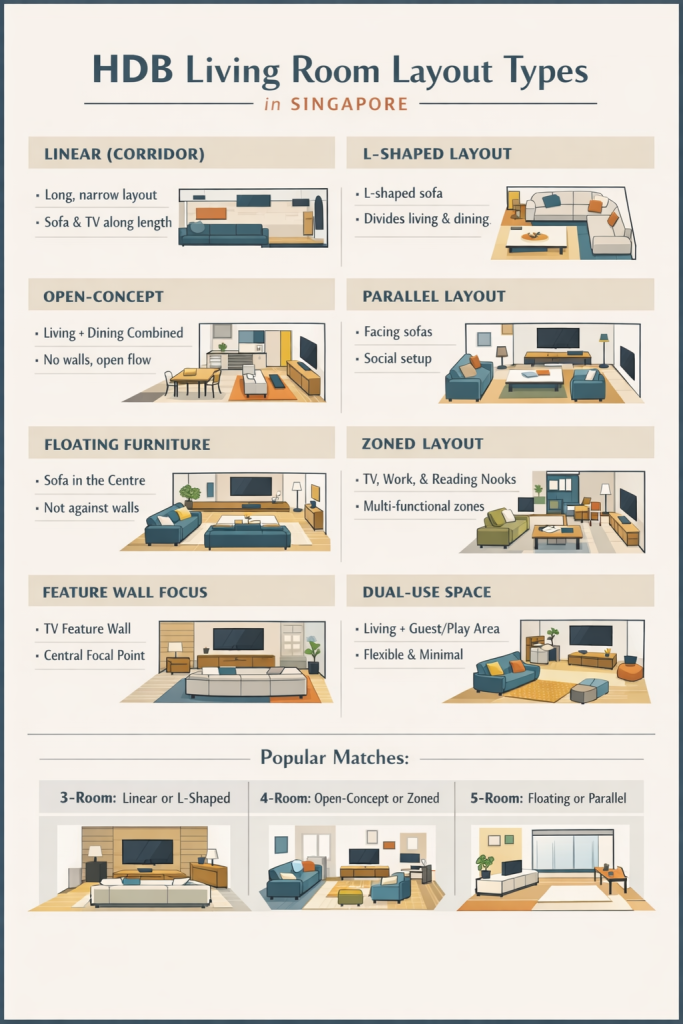
The majority of Singaporeans live in HDB flats, including BTO (aka lottery apartments according to some). These homes are characterized by their fixed, compact layouts, making space efficiency the single most critical factor in HDB living room design.
The primary challenge is to create a sense of space without losing functionality. This is where clever design and sticking to regulations become important.
| Design Strategy | Description | Application in HDB/BTO |
| Multi-Functional Furniture | Pieces that serve more than one purpose (e.g., storage ottomans, sofa beds, extendable dining tables). | Essential for maximizing utility in a limited footprint. |
| Vertical Storage | Utilizing wall space for shelving, built-in cabinets, and display units. | Draws the eye upward, making the room feel taller and freeing up floor space. |
| Visual Expansion | Using light, neutral colour palettes and large mirrors strategically placed to reflect light and space. | Creates the illusion of a much larger room, a key technique for small living room design Singapore. |
| Open Concept | Removing non-structural walls to merge the living and dining areas. | Must be done with extreme caution and HDB renovation permits are mandatory for any structural alteration. |
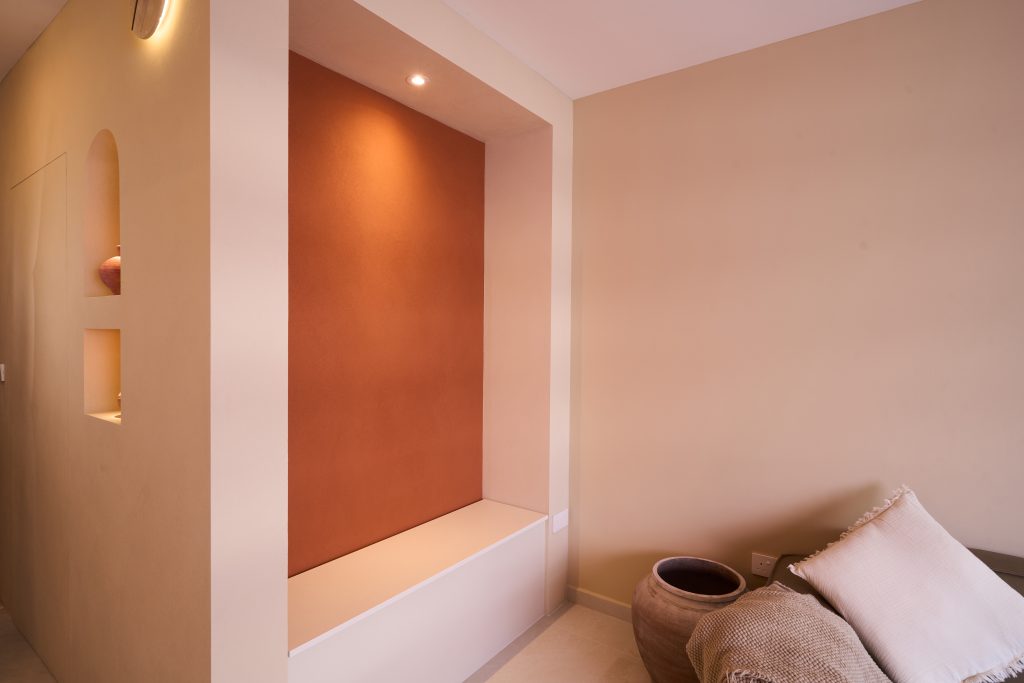
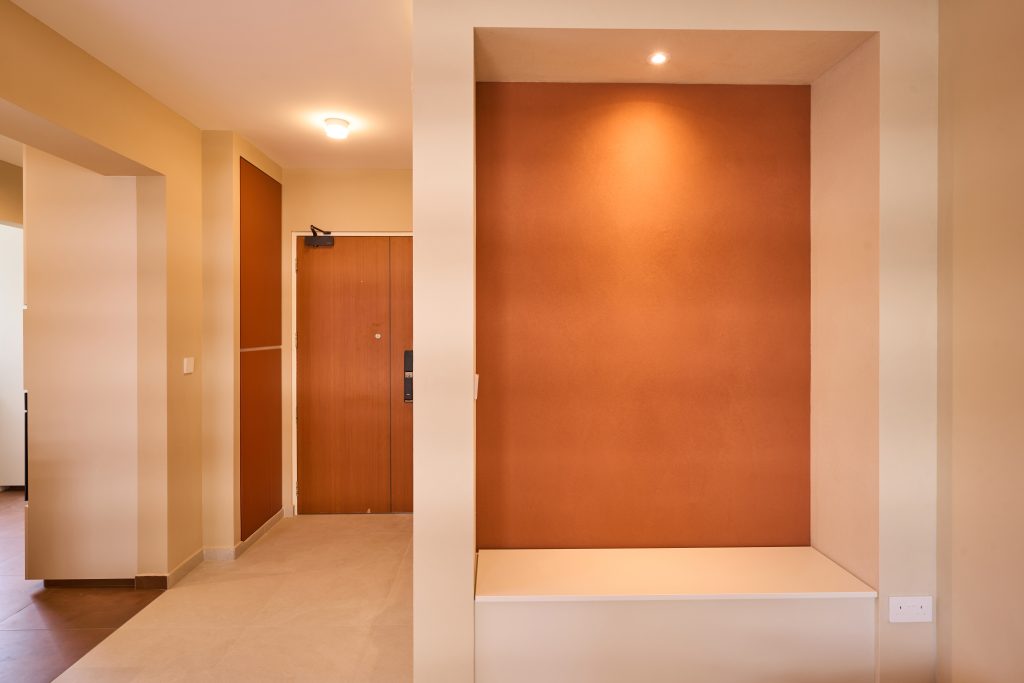
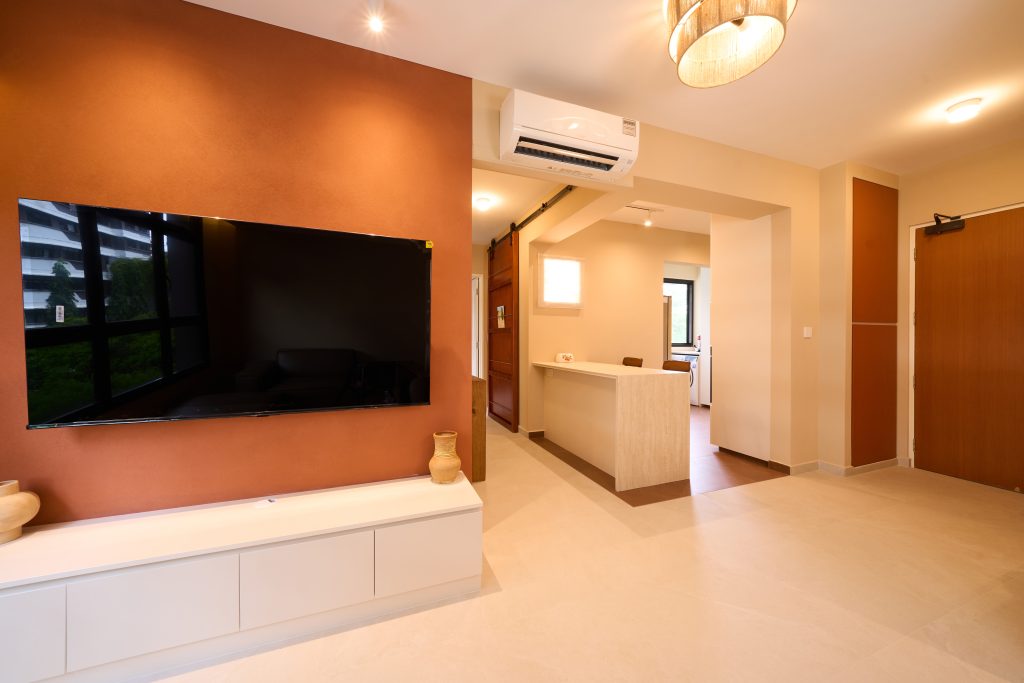
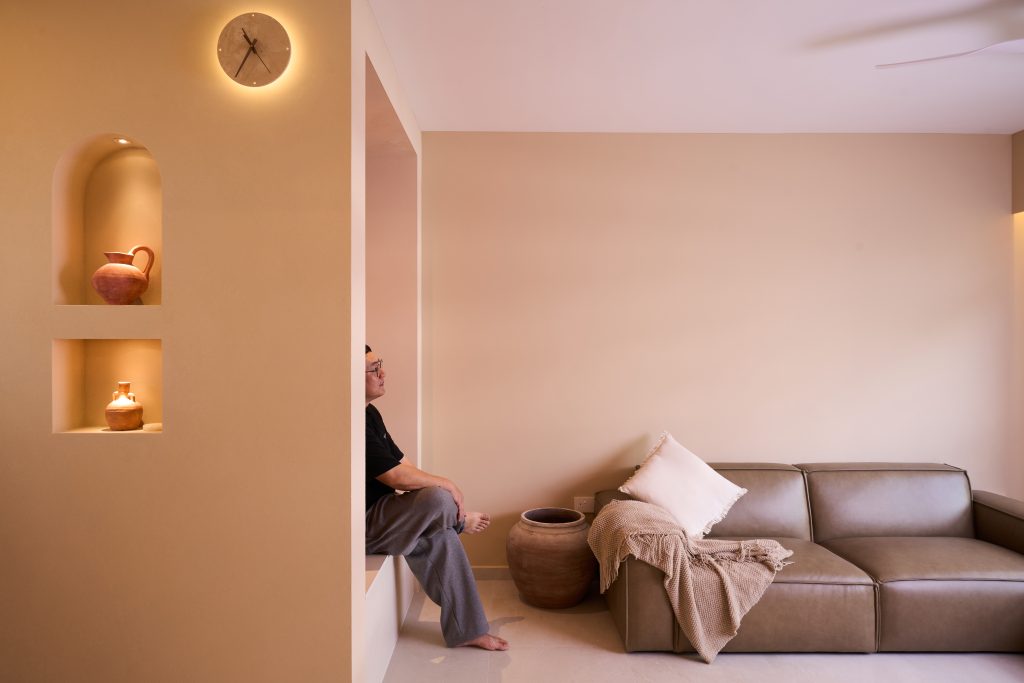
Compliance Note: When planning your HDB living room renovation, it is crucial to remember that any structural changes, such as hacking walls or altering existing layouts, require mandatory approval from the HDB. Engaging a HDB licenced contractor/ interior designer (like us!) ensures that your design plans are fully compliant, safe, and approved before work begins.
Condo Living Room Renovation: Luxury and Light

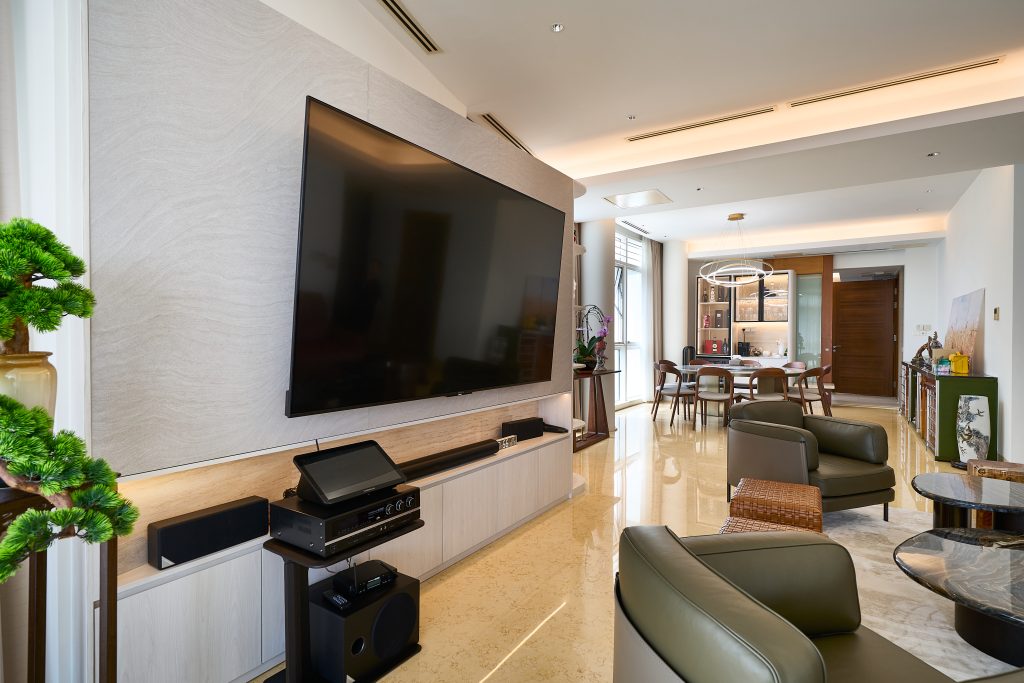
While private condominiums often offer more square footage and greater flexibility than HDB flats, they are not without their own rules. Condo renovations are governed by the Management Corporation Strata Title (MCST) of the development.
Condo living room renovation projects typically focus on enhancing the luxurious feel, maximizing natural light, and capitalizing on any available views.
- Maximizing Natural Light: Large windows are a common feature in condos. The design should prioritize light-filtering window treatments (like sheer linen curtains, a staple in Japandi design) and reflective surfaces to distribute light throughout the space.
- Open-Plan Concepts: Condos are more likely to accommodate open-plan living, which is perfect for modern family life and entertaining. This requires seamless flooring and a cohesive design language across the living, dining, and kitchen areas.
- High-End Finishes: Homeowners often opt for premium materials, smart home integration, and bespoke built-in cabinetry to elevate the space. The design should reflect a sophisticated, timeless elegance.
2. The Art of Serenity: Embracing Japandi and Wabi-sabi Design
In the fast-paced, high-density environment of Singapore, the living room must serve as a sanctuary, a place to decompress and reconnect. This is why we specialize in design philosophies that champion tranquility: Japandi and Wabi-sabi. These styles are perfectly suited for the Singaporean home, offering a timeless aesthetic that transcends fleeting trends.
Japandi: Where Function Meets Form

Japandi is the harmonious marriage of Japanese minimalism and Scandinavian Hygge (coziness). It is a style defined by clean lines, functionality, and a deep appreciation for natural materials. It offers a refined, uncluttered aesthetic that is ideal for small living room design in Singapore.
| Japandi Principle | Design Application in the Living Room |
| Minimalism & Function | Every item must have a purpose. Furniture is low-profile, clean-lined, and highly functional (e.g., a simple, well-crafted wooden coffee table). |
| Neutral Palette | A calming base of muted colours: soft whites, warm greys, beige, and light wood tones. This palette visually expands the space. |
| Natural Materials | Prioritizing light-coloured wood (ash, birch, light oak), bamboo, rattan, and natural fibres like linen and wool. |
| Craftsmanship | Investing in a few high-quality, handcrafted pieces rather than many mass-produced items. |
The Japandi approach to Living Room Design and Renovation is about creating a space that is effortlessly tidy and deeply relaxing. It’s a sophisticated simplicity that makes a small space feel curated, not cramped.
Wabi-sabi: Finding Beauty in Imperfection

While Japandi focuses on clean lines, Wabi-sabi delves into the philosophical. It is a Japanese aesthetic that embraces imperfection (wabi), transience, and the beauty of natural aging (sabi). It is the antithesis of mass-produced perfection, celebrating authenticity and a connection to nature.
For a Wabi-sabi living room, the focus shifts to texture, organic form, and a muted, earthy palette.
- Earthy Textures: Think raw, unpolished materials. Textured plaster walls, exposed concrete, rough-hewn wood, and natural stone. These elements bring a grounding, tactile quality to the space.
- Organic Shapes: Furniture and decor should feature soft, irregular, or asymmetrical shapes, avoiding harsh, perfect geometry. Handmade ceramics, slightly uneven textiles, and natural wood with visible grain and knots are key.
- Muted, Darker Tones: The palette leans towards the colours of the earth: terracotta, deep browns, moss green, and charcoal. These colours create a cocoon-like atmosphere, perfect for a serene retreat.
- Embracing Patina: Allowing materials to age naturally. A slight scratch on a wooden floor or the fading of a linen sofa is seen as adding character, not detracting from the beauty.
Interior Diary excels at blending these two styles, using the clean structure of Japandi as a foundation and layering the soulful, textured warmth of Wabi-sabi to create a truly unique and timeless living room design Singapore.
3. Practical Design Elements for the Singapore Living Room
Beyond aesthetics, a successful living room design Singapore must address the practical realities of the local climate and lifestyle.
Lighting Design: Beyond the Ceiling Lamp
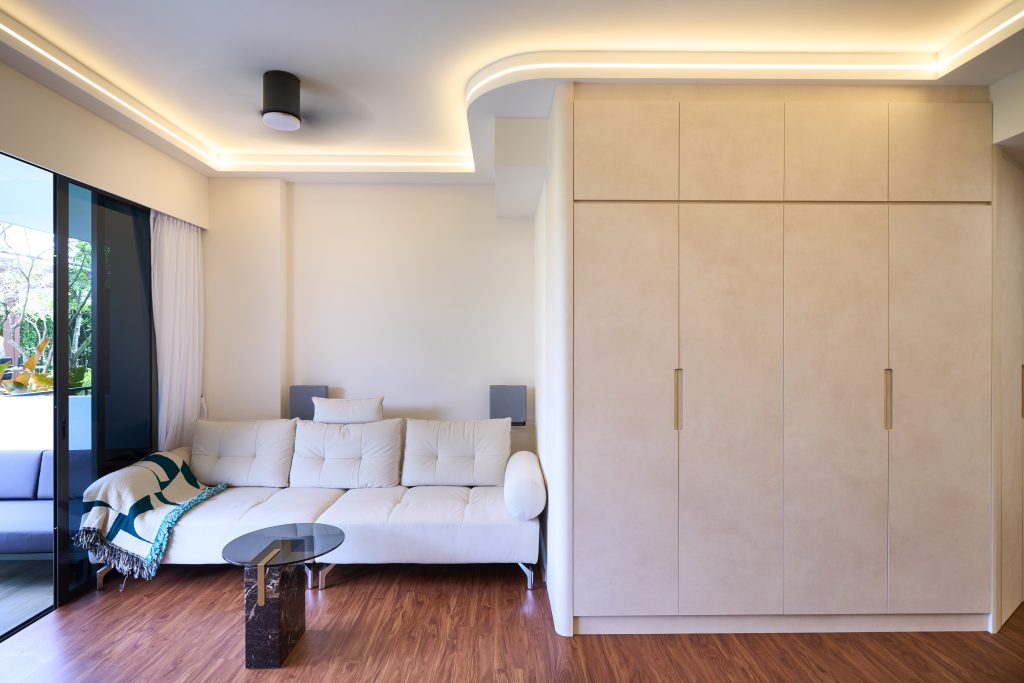
Lighting is the single most effective tool for transforming the mood and perceived size of a living room. In Singapore, where natural light can be intense, a layered approach is essential.
| Lighting Layer | Purpose | Japandi/Wabi-sabi Application |
| Ambient Lighting | General illumination for the whole room. | Soft, diffused light from recessed fixtures or a simple, sculptural pendant light. Avoid harsh overhead lighting. |
| Task Lighting | Focused light for specific activities (e.g., reading). | Floor lamps or table lamps with natural material shades (linen, paper) placed next to seating. |
| Accent Lighting | Highlighting architectural features, artwork, or textures. | Wall sconces or spotlights to emphasize a textured wall or a piece of Wabi-sabi pottery. |
The choice between warm white (3000K) and cool white (4000K+) is crucial. Warm white promotes relaxation and is preferred for a cozy, Hygge-inspired Japandi space, while cool white is better for task-oriented areas. A smart lighting system allows you to switch between the two, adapting the room’s mood instantly.
Material Selection: Durable and Tropical-Friendly
Singapore’s high humidity and heat mean that material selection is not just about looks; it’s about durability and maintenance.
- Humidity-Resistant Woods: While wood is central to both Japandi and Wabi-sabi, choosing the right type is vital. Teak, treated oak, and engineered wood are more stable and less prone to warping than softer woods.
- Easy-to-Clean Fabrics: Opt for natural fibres like linen and cotton, but ensure they are treated or blended for easy maintenance. Removable, washable slipcovers are a practical choice for families.
- Rattan and Woven Textures: These materials are naturally suited to the tropical climate and fit perfectly within the Japandi aesthetic, adding texture and lightness without the heaviness of solid wood.

- Incorporating Greenery: Indoor plants are a non-negotiable element in both styles, connecting the interior to nature. Choose low-maintenance, humidity-loving plants like Snake Plants, ZZ Plants, or Fiddle Leaf Figs to purify the air and add a splash of organic colour.
Smart Storage Solutions: The Key to Clutter-Free Living
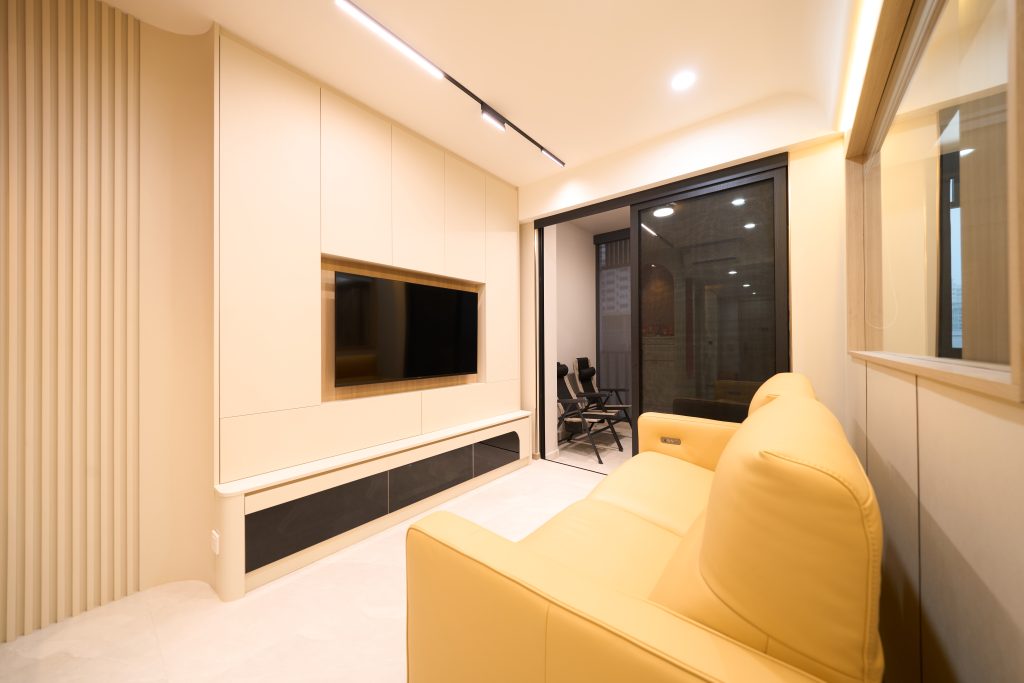
Clutter is the enemy of serenity, especially in a small living room design Singapore. The Japandi and Wabi-sabi philosophies demand a clean, minimalist environment, which can only be achieved through intelligent storage.
- Built-in Cabinetry: This is the most effective solution for HDB and BTO flats. Floor-to-ceiling built-ins, often in a seamless, handle-less design, provide maximum storage while blending into the wall, maintaining the clean lines of Japandi.
- Concealed Storage: All storage should be concealed. Open shelving should be used sparingly, only for carefully curated decorative items (like a single piece of Wabi-sabi pottery or a stack of art books).
- Multi-Purpose Furniture: As mentioned, pieces like coffee tables with hidden compartments or TV consoles that double as extensive storage units are essential for keeping everyday items out of sight.
4. The Interior Diary Difference: Your Partner in Timeless Design
Choosing the right interior designer is the most important decision in your living room renovation journey. At Interior Diary, we don’t just follow trends; we create timeless spaces that reflect your personal philosophy.
Our deep understanding of the Singapore context, from the specific requirements of BTO living room ideas to the luxury finishes of a condo, combined with our specialization in Japandi and Wabi-sabi, sets us apart.
We focus on:
- Compliance and Approvals: Handling all necessary HDB permits and MCST approvals, ensuring a smooth, stress-free renovation process.
- Space Optimization: Employing advanced space-planning techniques to make every square foot count, especially in compact homes.
- Holistic Design: Integrating the living room seamlessly with the rest of your home, ensuring a cohesive flow and design language.
- Authentic Materials: Sourcing durable, high-quality, and aesthetically appropriate materials that align with the Japandi and Wabi-sabi ethos.
We believe your living room should be a reflection of peace, simplicity, and enduring beauty. Let us help you transform your vision into a reality.
Conclusion
The journey to creating the perfect living room is a blend of practical necessity and aesthetic aspiration. Whether you are navigating the space constraints of an HDB flat or designing a luxurious condo sanctuary, the principles of thoughtful planning, compliance, and timeless design remain constant.
By embracing the serene simplicity of Japandi and the soulful authenticity of Wabi-sabi, you can transform your living room from a mere functional space into a true sanctuary, the calm, beautiful heart of your Singapore home.
Ready to create a living room that is both a masterpiece of design and a haven of peace?
Book an Appointment for a personalized, no-obligation consultation and transform your living room today!
Also check out our other articles on other rooms in your flat: