


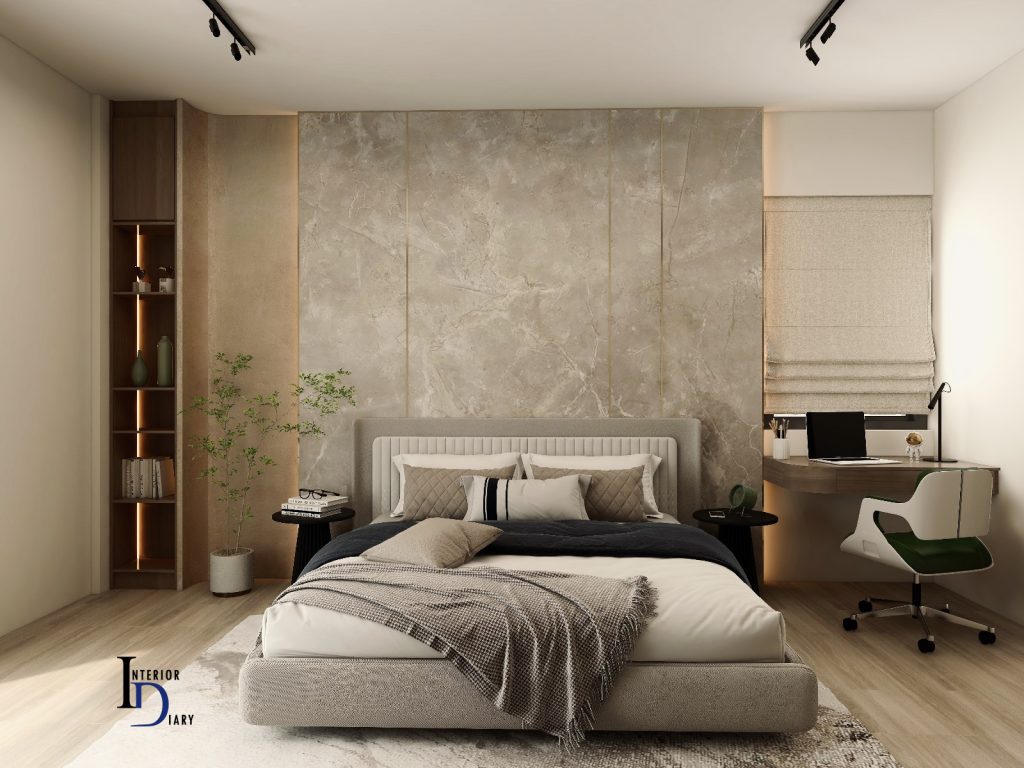
1. The Singapore Context: HDB, BTO, and Condo Considerations
Designing and renovating a master bedroom in Singapore is fundamentally shaped by the type of dwelling you own. The size, structural limitations, and renovation rules vary significantly between public housing (HDB/BTO) and private properties (Condominiums).
Understanding Space Constraints and Dimensions
Singapore’s residential units are notoriously compact, making efficient space planning the most critical factor in your design.
| Flat Type | Typical Master Bedroom Size (Approx.) | Key Design Challenge |
| 3-Room HDB | 10–12 sqm | Extremely limited space; requires multi-functional furniture. |
| 4/5-Room HDB/BTO | 12–15 sqm | Sufficient for a queen bed and built-in wardrobe; focus on vertical storage. |
| Executive/Maisonette | 16–20 sqm+ | More flexibility for a king bed, seating area, or larger walk-in wardrobe. |
| Condominium | Varies widely (15–30 sqm+) | Generally larger, but design must adhere to management corporation (MCST) rules. |
For the majority of Singaporeans living in HDB flats, the master bedroom often needs to accommodate a bed, a wardrobe, and sometimes a small workstation. This necessity drives the demand for custom built-in solutions that maximise every inch of available space.
Navigating Renovation Regulations (HDB/BTO)
Renovating an HDB flat, particularly a BTO unit, comes with strict guidelines to ensure structural integrity and public safety. Failing to comply can lead to costly rectification works.
Key HDB/BTO Renovation Rules for Master Bedrooms:
- Wall Demolition: Only non-load-bearing internal partition walls can be demolished, and this requires prior HDB approval. This is crucial if you plan to combine a common room with the master bedroom to create a larger space or a walk-in wardrobe.
- Built-in Fixtures: Built-in wardrobes, cabinets, and platforms must be designed such that they do not compromise the structural elements (beams, columns).
- Household Shelter (HS): The HS, often located within or adjacent to the master bedroom, is a civil defence structure. Its walls, floor, ceiling, and steel door must not be tampered with. You cannot drill into the reinforced walls or floor, which limits how you can install fixtures like wall-mounted TVs or shelves in that specific area.
- Fire Safety: Any new partition walls (e.g., to create a walk-in wardrobe) must ensure that the fire escape route from the bedroom remains direct and does not pass through another room.
Condominium and Private Property Flexibility
Condominiums and private landed homes offer greater design freedom, as they are not subject to HDB’s stringent structural regulations. However, you must still adhere to the Management Corporation Strata Title (MCST) rules.
- MCST Approval: For any external-facing changes (e.g., window tinting, balcony enclosures) or works that affect common property (e.g., plumbing, electrical systems), you must obtain approval from the MCST.
- Noise and Timing: Renovation work is typically restricted to specific hours and days to minimise disruption to neighbours.
Interior Diary’s design process always begins with a thorough review of your property’s specific regulations, ensuring a smooth, compliant, and stress-free renovation journey.
2. The Art of Minimalism: Japandi and Wabi-sabi Design
Interior Diary specialises in creating tranquil, timeless spaces through the application of Japandi and Wabi-sabi design philosophies. These styles are perfectly suited for the Singapore master bedroom, as they inherently promote calm, order, and a deep connection to nature, qualities essential for a true sanctuary.
Japandi: The Harmony of Form and Function
Japandi is a hybrid aesthetic that marries the rustic, natural elements of Japanese design with the clean lines and cosy comfort of Scandinavian hygge. It is a celebration of functional minimalism.
| Japandi Core Principles | Application in Master Bedroom Design |
| Functional Minimalism | Every item serves a purpose; clutter is eliminated. |
| Clean Lines | Furniture is sleek, low-profile, and uncluttered. |
| Natural Materials | Light woods (ash, birch, light oak), bamboo, and rattan. |
| Muted Palette | Soft, neutral colours: off-whites, light greys, beige, and pale pastels. |
| Craftsmanship | Focus on high-quality, handcrafted pieces over mass-produced items. |
A Japandi master bedroom is a haven of quiet sophistication. It uses light, airy colours to make the compact Singapore bedroom feel larger, while natural wood tones introduce warmth and texture.
Wabi-sabi: Embracing Imperfection and Authenticity
Wabi-sabi is a profound Japanese aesthetic concept that finds beauty in imperfection, transience, and the natural cycle of growth and decay. It is a more organic, earthy, and philosophical approach than the polished look of Japandi.
| Wabi-sabi Core Principles | Application in Master Bedroom Design |
| Authenticity | Embracing the natural state of materials; avoiding artificial finishes. |
| Imperfection | Valuing asymmetrical, handmade, or slightly worn objects. |
| Earthy Palette | Deeper, richer neutrals: terracotta, rust, deep grey, and dark wood. |
| Organic Forms | Furniture and decor with irregular, natural shapes and textures. |
| Simplicity | A stripped-back, unpretentious environment that encourages reflection. |
A Wabi-sabi master bedroom feels grounded and deeply personal. It might feature a raw concrete wall finish (where permitted), a hand-thrown ceramic lamp, or linen bedding that is intentionally wrinkled. It is a style that allows the space to breathe and evolve with the homeowner.
Applying the Philosophies to Your Master Bedroom
Interior Diary excels at blending these two styles to create a bespoke sanctuary. We often use the Japandi framework for the room’s structure (clean lines, built-in storage) and infuse it with Wabi-sabi elements for soul and character (textured walls, organic decor, imperfect textiles).
Design Tip: Start with a Japandi base, a low-profile bed frame in light wood and a neutral colour scheme. Then, introduce Wabi-sabi accents: a hand-woven rug, a piece of driftwood art, or a textured lime-wash paint finish on a feature wall. This balance creates a space that is both serene and deeply authentic.
3. Maximising Space and Storage in Compact Bedrooms
In Singapore, where the average HDB master bedroom is approximately 12–15 sqm, smart storage is non-negotiable. The key is to integrate storage seamlessly so that it becomes part of the architecture, not an afterthought.
The Power of Built-in Wardrobes and Integrated Storage
Custom built-in carpentry is the most effective way to maximise storage in a small space. Unlike freestanding wardrobes, built-ins can be designed to fit floor-to-ceiling and wall-to-wall, eliminating dust traps and creating a streamlined look.
- Full-Height Design: Utilise the full vertical space up to the ceiling. Seasonal items or extra bedding can be stored in the highest compartments.
- Sliding Doors: In a narrow master bedroom, hinged wardrobe doors can obstruct movement. Sliding doors are a space-saving essential, allowing you to access your clothes without sacrificing floor area.
- Integrated Vanity: Instead of a separate dressing table, integrate a pull-out or fold-down vanity within the wardrobe unit. This keeps the room clutter-free when not in use.
Multi-functional Furniture: Beds with Storage and Integrated Desks
The bed is the largest piece of furniture, and it should work harder than just providing a place to sleep.
- Platform Storage Beds: A custom-built platform bed can offer massive storage underneath, replacing the need for bulky drawers or cabinets. This is particularly popular in HDB master bedrooms.
- Hydraulic Lift Beds: These beds allow the entire mattress to be lifted with a hydraulic mechanism, revealing a large, accessible storage area beneath the frame, perfect for luggage or bulky items.
- Integrated Workstation: For those who work from home, a desk can be integrated into the headboard or a corner of the built-in wardrobe. A simple pull-out drawer can serve as a temporary desk surface, maintaining the room’s clean aesthetic.
Vertical Space Utilisation: Shelving and Loft Beds
When floor space is limited, look up. Vertical storage draws the eye upward, making the room feel taller and more spacious.
- Floating Shelves: Use floating shelves instead of bulky bookcases for displaying small, curated items. In a Japandi or Wabi-sabi context, these shelves should hold only a few, meaningful objects, not clutter.
- Loft Beds (for high ceilings): While less common in standard HDBs, loft beds can be a game-changer in high-ceilinged executive apartments or some condominiums. They free up the entire floor area beneath for a walk-in wardrobe, a study, or a lounge area.
4. Creating the Perfect Ambiance: Colour, Lighting, and Materials
The atmosphere of your master bedroom is determined by its sensory elements. The right combination of colour, light, and texture is what transforms a functional room into a personal sanctuary.
The Calming Colour Palette: Neutrals and Earth Tones
Both Japandi and Wabi-sabi favour a calming, neutral palette, which is ideal for promoting relaxation.
- Base Colours: Start with a base of soft, warm neutrals like cream, beige, or a very light grey. These colours reflect light, making the room feel brighter and more expansive—a crucial benefit in Singapore’s smaller spaces.
- Accents: Introduce accent colours through textiles and decor.
- Japandi: Use subtle, muted colours like sage green, dusty blue, or pale terracotta.
- Wabi-sabi: Opt for richer, earthier tones like charcoal, rust, or deep olive green, often in the form of textured linen or raw clay pottery.
- Monochromatic Schemes: A monochromatic scheme (using different shades and textures of a single colour, like white or beige) is highly effective in creating a serene, cohesive, and visually uncluttered space.
Layered Lighting for Mood and Function
A single overhead light is insufficient for a sanctuary. Effective lighting design uses multiple layers to cater to different needs and moods.
- Ambient Lighting: The main, soft light source, typically from a cove light, a ceiling fixture, or recessed downlights. This provides overall illumination.
- Task Lighting: Focused light for specific activities, such as reading lamps mounted on the wall or bedside table, or a dedicated light over the vanity area.
- Accent Lighting: Used to highlight architectural features, artwork, or textures. Think of strip lighting beneath a floating shelf or a low-level floor lamp that casts a warm glow.
Japandi/Wabi-sabi Lighting: Choose fixtures made from natural materials like rice paper, bamboo, or unglazed ceramic. The light should be warm (2700K–3000K) and diffused to create a soft, inviting atmosphere.
Material Selection: Natural Textures and Sustainable Choices

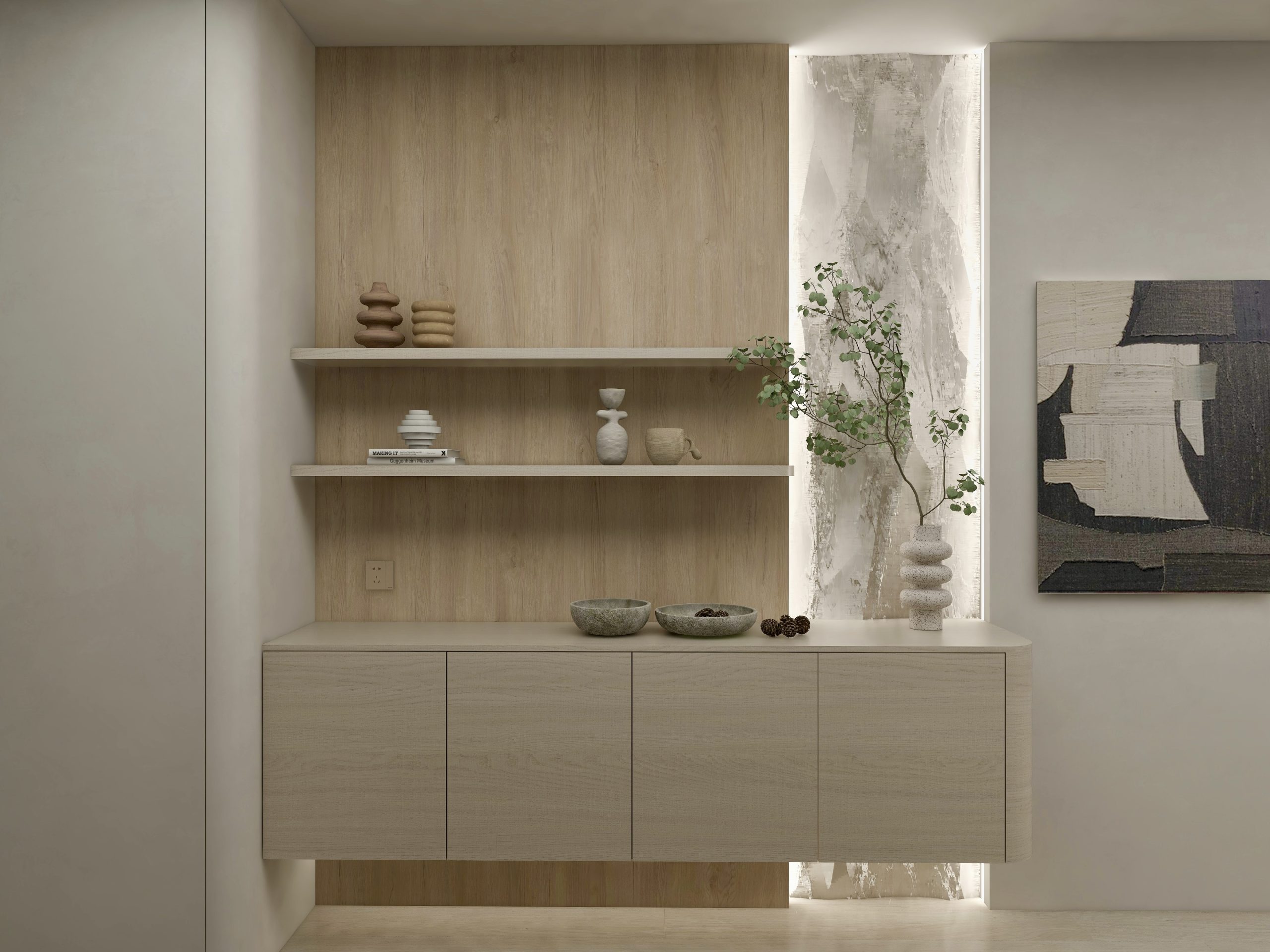
The tactile quality of materials is central to both Japandi and Wabi-sabi. They encourage a shift away from synthetic, cold materials towards those that are natural, durable, and age gracefully.
| Material Category | Japandi Preference | Wabi-sabi Preference |
| Wood | Light, smooth, and clean-finished woods (Ash, Maple, Light Oak). | Raw, reclaimed, or distressed woods with visible grain and knots. |
| Textiles | High-quality linen, cotton, and wool in solid, muted colours. | Rougher textures like raw silk, hemp, and heavily textured linen. |
| Surfaces | Smooth, matte paint finishes, light-coloured stone. | Textured finishes like lime wash, micro-cement, or raw concrete (where possible). |
| Accents | Minimalist ceramics, black metal accents. | Hand-thrown pottery, natural stone, dried botanicals, and imperfect metal. |
By prioritising these natural materials, Interior Diary ensures your master bedroom not only looks beautiful but also feels authentic and calming to the touch.
5. Essential Design Elements for a Singapore Master Bedroom
Beyond the core philosophy, several practical elements are key to a successful Master Bedroom Design Singapore.
The Walk-in Wardrobe Dream: Making it Work in Small Spaces

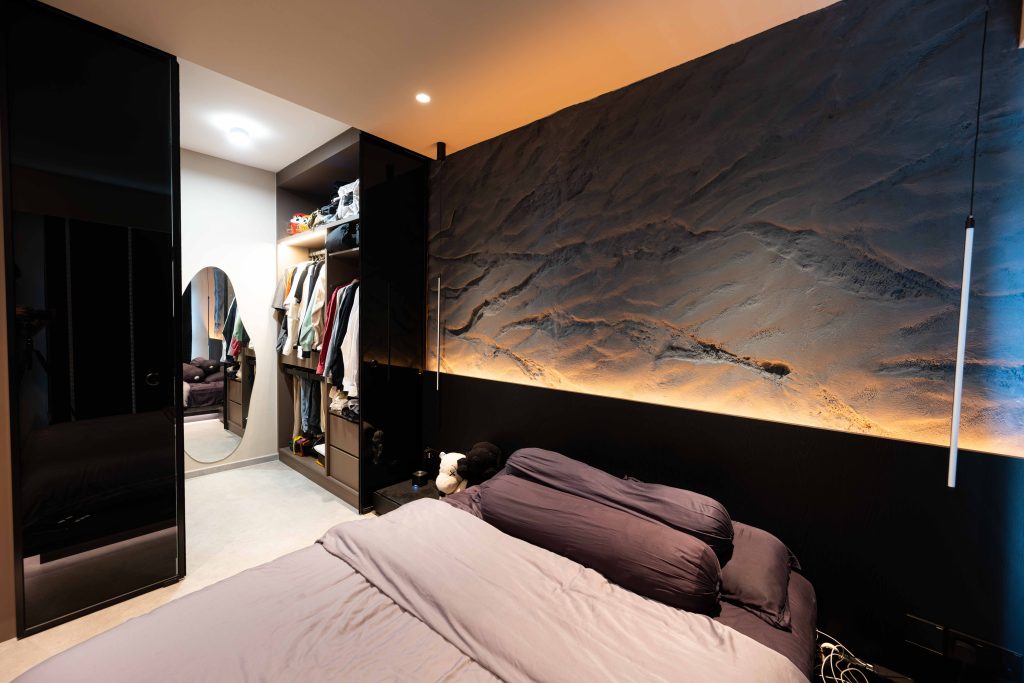
The walk-in wardrobe is a luxury often associated with large homes, but it can be adapted for a compact Singapore master bedroom.
The “L-Shape” or “Pass-Through” Wardrobe: Instead of a separate room, an L-shaped wardrobe or a pass-through design can be created by partitioning a section of the master bedroom or by combining it with an adjacent common room (subject to HDB approval).
- Glass Partitions: Use fluted or frosted glass partitions instead of solid walls. This creates the illusion of a separate space while allowing light to pass through, preventing the room from feeling too cramped.
- Open Shelving: Incorporate open shelving for shoes and accessories. This keeps the space visually light and forces you to maintain a tidy, curated display, aligning perfectly with the Japandi principle of functional minimalism.
Ensuite Bathroom Integration and Design

The ensuite bathroom is an extension of the master sanctuary. Its design should flow seamlessly from the bedroom.
- Visual Continuity: Use the same flooring material (or a complementary one) and colour palette in both the bedroom and the ensuite to blur the lines and make the entire area feel larger.
- Hidden Storage: In a small ensuite, use mirrored cabinets instead of simple mirrors for hidden storage. This keeps toiletries out of sight, maintaining the minimalist aesthetic.
- Ventilation: Given Singapore’s humidity, proper ventilation is critical. Ensure your ensuite has an effective exhaust fan to prevent moisture and mould from affecting the bedroom area.
Optimising Airflow and Natural Light
Singapore’s tropical climate demands a focus on comfort and energy efficiency.
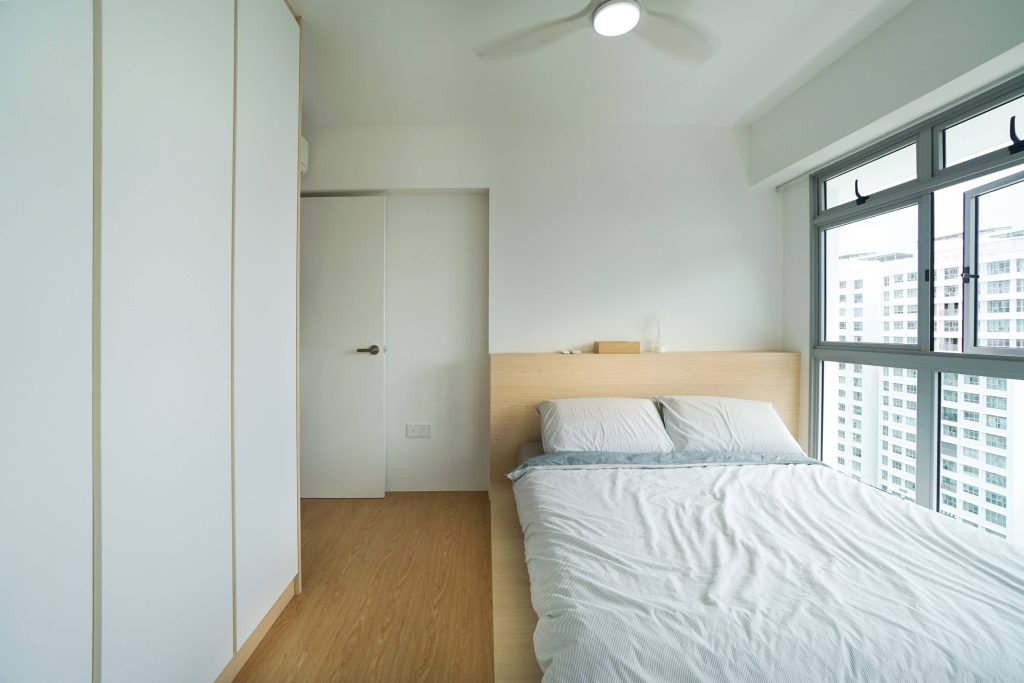
- Natural Light: Maximise natural light by using sheer curtains or blinds instead of heavy drapes. In a Japandi design, light is a key element, and sheer fabrics diffuse the harsh tropical sun into a soft, ambient glow.
- Airflow: Position the bed and furniture to allow for optimal cross-ventilation. Consider a ceiling fan in addition to air conditioning for energy-efficient cooling. The gentle, natural movement of air is a subtle element of comfort that enhances the sanctuary feel.
6. The Interior Diary Difference: Your Partner in Sanctuary Creation


Choosing the right interior design firm is the most important decision in your renovation journey. At Interior Diary, we don’t just design rooms; we craft environments that enhance well-being and reflect a sophisticated, timeless aesthetic.
Our Expertise in Japandi and Wabi-sabi
Our deep understanding of the Japandi and Wabi-sabi philosophies allows us to translate these complex aesthetics into practical, liveable spaces perfectly suited for the Singapore lifestyle.
- Local Adaptation: We know how to apply the principles of natural materials and minimalism while adhering to local constraints, such as HDB’s structural rules and the need for high-capacity storage in small spaces.
- Material Sourcing: We have established relationships with local suppliers to source authentic, high-quality materials, from light oak veneers for Japandi cabinetry to textured lime-wash paints for a Wabi-sabi feature wall.
- Custom Carpentry: Our in-house carpentry team specialises in creating bespoke, multi-functional furniture that is the cornerstone of efficient Singapore design, ensuring every piece is perfectly integrated and maximises utility.
A Seamless Design and Renovation Process
We believe the journey to your perfect sanctuary should be as peaceful as the final result. Our process is transparent, collaborative, and meticulously managed:
- Initial Consultation & Needs Assessment: We discuss your lifestyle, budget, and design preferences, paying close attention to the specific requirements of your HDB, BTO, or Condo unit.
- Concept & Space Planning: We develop 2D layouts and 3D renderings, focusing on maximising space efficiency and integrating Japandi/Wabi-sabi elements.
- Material & Colour Selection: We guide you through selecting the perfect natural materials and calming colour palettes that define the sanctuary aesthetic.
- Renovation & Project Management: Our dedicated project managers oversee all aspects of the build, ensuring compliance with local regulations and maintaining the highest standards of craftsmanship.
- Final Handover: We deliver a completed master bedroom that is not just beautiful, but a true reflection of your personal peace and style.
7. Conclusion: Your Dream Sanctuary Awaits
The master bedroom in Singapore is a unique design challenge, a small space that must serve a grand purpose. By embracing the principles of functional minimalism, natural materials, and smart, custom storage, you can transform your room into a personal sanctuary.
Whether you are drawn to the clean, harmonious lines of Japandi or the earthy, authentic beauty of Wabi-sabi, Interior Diary has the expertise to bring your vision to life. We understand the nuances of designing a master bedroom, from HDB regulations to the tropical climate, ensuring your space is compliant, comfortable, and utterly captivating.
FAQ
A master bedroom renovation in Singapore typically costs between $8,000 and $25,000 for an HDB flat, depending on the scope of work. The biggest cost driver is custom carpentry, particularly a built-in wardrobe, which alone can run from $3,000 to $8,000 depending on the size, material and finish. Other major costs include flooring, false ceiling with lighting, and painting. A condo master bedroom with higher-end materials and an en suite bathroom can push the total significantly higher. Setting aside a 10 to 15 percent contingency on top of your quoted budget is recommended for any unexpected works.
Both styles create a calm, clutter-free bedroom but they achieve it differently. A Japandi master bedroom uses light wood tones, neutral whites and beige, clean-lined furniture, and concealed storage to create a bright, airy feel. A Wabi-Sabi bedroom goes darker and more textural, featuring earthy tones like terracotta and charcoal, limewash or microcement feature walls, aged wood grain finishes, and organic shapes that embrace subtle imperfections. If you prefer a crisp, hotel-like minimalism, Japandi is the better fit. If you want a warmer, moodier space that feels more natural and handcrafted, Wabi-Sabi suits that better.
The most effective storage solution for a compact HDB master bedroom is a full-height built-in wardrobe that runs floor to ceiling and wall to wall. This maximises every inch of vertical space and keeps the room visually tidy compared to freestanding wardrobes, which leave awkward gaps above them. Inside the wardrobe, a combination of hanging rails, pull-out drawers, and fixed shelves works better than a single hanging section for most households. Other space-saving options include a platform bed with drawer storage underneath, recessed wall niches for displaying items, and a floating bedside shelf instead of a bedside table to free up floor space.
You can only hack non-structural partition walls in your HDB flat, and you must obtain HDB approval before any hacking work begins. Structural walls, columns, and beams cannot be touched under any circumstances. If you want to enlarge the master bedroom by removing a wall between two rooms, your interior designer or HDB-licensed contractor must first verify against the approved HDB floor plan that the wall is non-structural, then submit a renovation permit application before work starts. Proceeding without approval is illegal and can result in fines and mandatory reinstatement of the original wall at your own cost.
Book Your Consultation
Ready to transform your master bedroom into the perfect sanctuary you deserve?
Don’t let space constraints limit your dreams. Our design experts are ready to show you how the timeless elegance of Japandi and Wabi-sabi can be perfectly adapted to your Singapore home.
Book an Appointment with Interior Diary today for a personalised consultation and take the first step towards a more serene and beautiful living space.
Click Here to Book Your Free Design Consultation
Interior Diary: Crafting Sanctuaries, One Home at a Time.
Otherwise, we also have guides on kitchen, bathroom, and living room renovation.