

BTO Renovation Singapore: Complete Guide to Timeline, Cost & Design Ideas 2025
Introduction: Your BTO Keys, Your Dream Home
Receiving the keys to your Build-To-Order (BTO) flat is one of the most exciting milestones for any Singaporean couple or family. It marks the beginning of a new chapter and the opportunity to transform a blank canvas into your dream home. However, the journey from key collection to move-in can often feel overwhelming, especially when navigating the complexities of timelines, budgets, and HDB regulations.
This comprehensive guide is designed to be your essential roadmap for BTO renovation Singapore in 2025. We will break down the entire process, from understanding the financial commitments and the critical HDB rules to exploring the latest and most serene design trends.
At Interior Diary, we believe that your home should be a sanctuary. As specialists in the calming, minimalist aesthetics of Japandi design Singapore and Wabi-sabi interior design, we are here to show you how to create a space that is not only beautiful and functional but also deeply reflective of peace and tranquility.
Ready to start planning your perfect BTO home? Let’s dive into the details.
Table of Contents
1.The BTO Renovation Timeline: A Step-by-Step Guide
2.BTO Renovation Cost in 2025: What to Budget
3.Navigating HDB Renovation Guidelines for BTO Flats
4.BTO Design Ideas 2025: Embracing Japandi and Wabi-sabi
5.Choosing the Right Partner: Why Interior Diary is Your BTO Expert
1. The BTO Renovation Timeline: A Step-by-Step Guide
A typical BTO renovation timeline is significantly shorter than a resale flat renovation, primarily because you avoid the extensive hacking and repair work required for older units. On average, you should plan for a total duration of 3 to 5 months from the moment you get your keys to the day you move in.
The timeline can be broken down into three critical phases: Pre-Renovation, Renovation Works, and Post-Renovation.
Phase 1: Pre-Renovation (4–8 Weeks)
This phase is all about planning, paperwork, and preparation. Rushing this stage is the number one cause of delays later on.
A. Securing Financing and Insurance
Before committing to any design, you must finalize your budget. This involves securing your HDB loan or bank loan and applying for a renovation loan if necessary. In Singapore, renovation loans are typically capped at S$30,000 or six times your monthly income, whichever is lower. You should also secure a Home Protection Scheme (HPS) and fire insurance.
B. Selecting Your Interior Designer (ID) or Contractor
Choosing the right partner is crucial. An experienced ID, like Interior Diary, will not only help you visualize your dream home but also manage the entire process, including the critical HDB permit application. Look for a firm with a strong portfolio in BTO projects and a deep understanding of local regulations.
C. Design Consultation & Finalisation
This is where your vision takes shape. You will work with your ID to finalize the floor plan, 3D renderings, material selection, and carpentry designs. This stage requires patience and clear communication to ensure all details are locked in before work begins.
D. HDB Permit Application
Your ID or contractor must apply for a Renovation Permit from the HDB before any work can commence. This process can take up to three weeks. It is illegal to start any renovation work without this approval. A good ID will submit the necessary documents, including layout plans and details of the proposed works, on your behalf.
Phase 2: Renovation Works (8–12 Weeks)
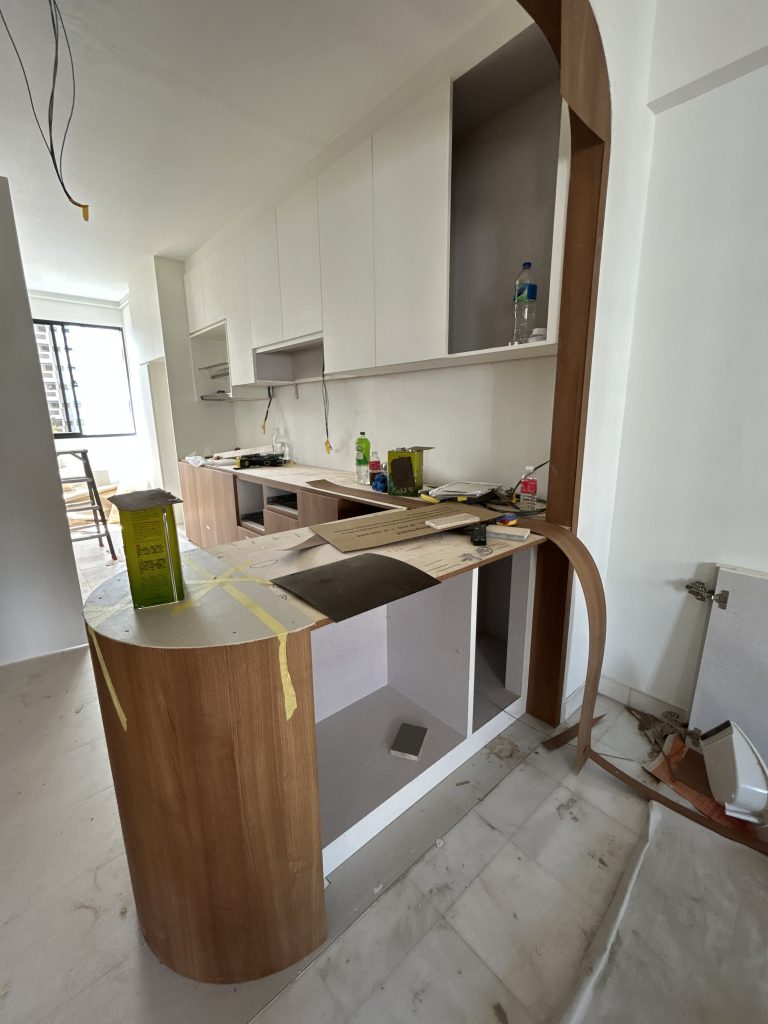
This is the physical construction phase. The duration depends heavily on the scope of work, especially the complexity of carpentry.
| Week | Work Description | Key Activities |
| 1–2 | Initial Works & Wet Works | Protection of existing HDB finishes, minor hacking (if any), plumbing and electrical rough-in, air-con installation. |
| 3–4 | Tiling & Plastering | Laying new floor/wall tiles (if HDB’s are hacked, subject to rules), plastering walls and ceilings. |
| 5–8 | Carpentry Fabrication & Delivery | Off-site fabrication of customized kitchen cabinets, wardrobes, and feature walls. This is often the longest lead time. |
| 9–10 | Installation & Painting | Installation of carpentry, painting of walls and ceilings, installation of light fixtures and sanitary fittings. |
| 11–12 | Final Fixtures & Touch-ups | Installation of glass works, final electrical points, cleaning, and final quality checks. |
Phase 3: Post-Renovation (1–2 Weeks)
The final stretch involves moving in and settling down.
•Final Cleaning: A thorough cleaning of the entire unit.
•Furniture & Appliance Delivery: Delivery and installation of loose furniture and major appliances (fridge, washer, dryer).
•Final Handover: Your ID walks you through the completed home, addressing any final minor defects or touch-ups.
Key Takeaway: The entire process is a delicate balance. A well-planned pre-renovation phase is the best way to ensure the renovation works phase stays on track and within the BTO renovation timeline.
2. BTO Renovation Cost in 2025: What to Budget
Understanding the BTO renovation cost is perhaps the most stressful part of the process. While BTO flats are generally cheaper to renovate than resale flats (as they don’t require extensive hacking and repair), costs have been rising due to inflation, labor shortages, and increased material costs in 2025.
Here is an estimated breakdown of the average BTO renovation costs in Singapore for 2025, based on a moderate scope of work that includes customized carpentry, electrical work, and minor flooring/wet works:
| Flat Type | Estimated BTO Renovation Cost (2025) |
| 3-Room | S$25,000 – S$50,000 |
| 4-Room | S$30,000 – S$65,000 |
| 5-Room | S$40,000 – S$80,000 |
It is important to note that these figures exclude the cost of loose furniture and major appliances. The final cost is highly dependent on your design choices and the quality of materials.
Key Cost Components in a BTO Renovation
The bulk of your budget will be allocated to a few key areas:
A. Carpentry (40% – 50% of Budget)
Customized built-in carpentry, kitchen cabinets, wardrobes, TV consoles, and storage units, is the single largest expense. The cost is determined by the material (laminates, solid wood, glass), the complexity of the design, and the total length of the cabinets. Opting for a full-height, custom kitchen and multiple built-in wardrobes will push your budget towards the higher end of the range.
B. Electrical and Lighting (10% – 15% of Budget)
This includes running new electrical points, installing light fixtures, and potentially installing a false ceiling to conceal wiring and air-conditioning ducts. A well-designed lighting plan is essential for creating the right ambiance, especially for the serene aesthetics of Japandi and Wabi-sabi designs.
C. Wet Works and Tiling (10% – 20% of Budget)
While BTO flats come with basic flooring and finished bathrooms, many homeowners choose to overlay or hack the HDB-provided tiles for a more personalized look. This includes waterproofing, screeding, and laying new tiles in the kitchen, service yard, or even the living room.
D. Design and Project Management Fees (10% – 15% of Budget)
Hiring a reputable Interior Designer provides peace of mind and expertise. Their fees cover design conceptualization, 3D rendering, material sourcing, and full project management, ensuring the work adheres to HDB standards and is completed on time.
Cost-Saving Strategies for BTO Owners
While you shouldn’t compromise on quality, there are smart ways to manage your BTO renovation cost:
1.Keep HDB Finishes: If you opted for the Optional Component Scheme (OCS), keeping the HDB-provided flooring and internal doors can save you thousands of dollars in hacking and replacement costs.
2.Prioritize Carpentry: Focus your custom carpentry budget on high-traffic areas like the kitchen and master bedroom wardrobe, and use ready-made, high-quality furniture for other rooms.
3.Choose Quality Over Quantity: Instead of renovating every corner, invest in a few high-impact, quality materials that align with the Japandi or Wabi-sabi aesthetic, such as a beautiful wood grain laminate or a textured feature wall.
4.The 10-15% Buffer: Always set aside a contingency fund of 10% to 15% of your total budget for unexpected issues or last-minute changes.
3. Navigating HDB Renovation Guidelines for BTO Flats
The most critical aspect of any BTO renovation Singapore is adhering to the Housing & Development Board (HDB) regulations. These rules are in place to ensure the structural integrity of the building and the safety of all residents. Ignoring them can lead to hefty fines and the mandatory reinstatement of illegal works.
The Golden Rule: No Hacking of Structural Walls
This rule is non-negotiable. You are strictly prohibited from hacking or altering any structural walls, columns, or beams within your BTO flat. Your ID will be able to identify these elements on the HDB floor plan. Any proposed wall removal must be checked against the approved HDB plan to ensure it is a non-structural partition wall.
The 3-Year Rule for Wet Areas
For new BTO flats, HDB imposes a 3-year restriction on the removal of wall and floor finishes in the wet areas, specifically the bathrooms and toilets.
“Newly built flats have a 3-year restriction period in place for the removal of wall and floor finishes in the bathrooms/toilets (from the date of completion of the block) to allow the underlying waterproofing membrane to settle.”
Implications for Your Design:
•You cannot hack the existing floor or wall tiles in your bathrooms for the first three years.
•If you want a different look, you must use creative solutions like tile-over-tile systems (overlaying) or specialized paint, but this must be done with caution and within HDB’s guidelines.
•This means your initial design must work with the HDB-provided bathroom finishes.
Electrical and Plumbing Rules
HDB has specific rules regarding the concealment of utilities:
•Concealed Wiring: While you can run electrical wiring within trunking or a false ceiling, you are generally not allowed to embed new electrical conduits or pipes into the structural walls or floor slabs. This is why many BTO renovations utilize false ceilings to hide air-con piping and electrical runs for a cleaner look.
•Sanitary Fittings: Relocating the main sanitary pipes (e.g., the toilet bowl discharge pipe) is often restricted or requires special approval, as it affects the plumbing system of the units below you. Minor shifts of wash basins or shower mixers are usually permissible.
Permit Essentials and Approved Contractors
To ensure compliance, all renovation works must be carried out by an HDB-registered contractor.
1.Check the List: Always verify that your chosen ID or contractor is on the HDB’s Directory of Renovation Contractors (DRC).
2.Permit Display: Once the permit is approved, your contractor must display the permit notice outside your flat during the renovation period.
3.Completion Deadline: Renovation works for new BTO flats must be completed within three months from the date the permit is granted.
By understanding and respecting these HDB renovation guidelines, you can avoid costly mistakes and ensure a smooth, legal renovation process.
4. BTO Design Ideas 2025: Embracing Japandi and Wabi-sabi
The design phase is where your BTO flat truly becomes yours. In 2025, there is a clear shift away from cold, stark minimalism towards warmer, more textured, and deeply personal styles. At Interior Diary, we specialize in two design philosophies that perfectly capture this mood: Japandi and Wabi-sabi. These styles are particularly well-suited for BTO flats, as they prioritize function, light, and the illusion of space.
Japandi Design Singapore: The Fusion of Form and Function
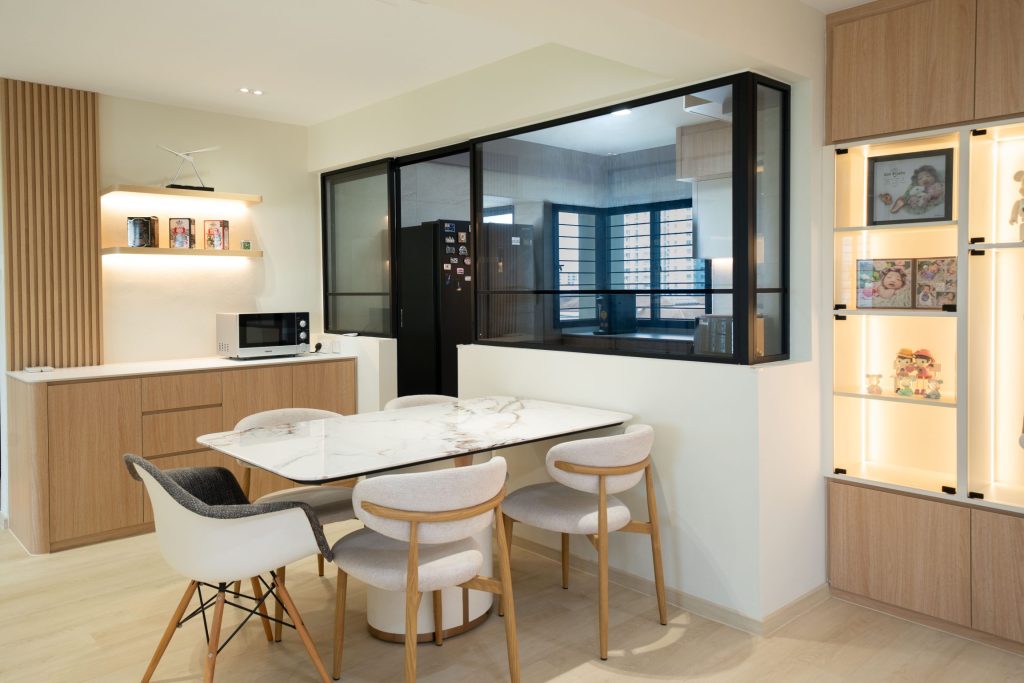
Japandi is the harmonious blend of Japanese minimalism and Scandinavian hygge (coziness). It is a style defined by clean lines, functional simplicity, and a deep appreciation for craftsmanship and natural materials.
Key Elements of Japandi in a BTO:
•Palette: Muted, neutral colors, think warm whites, soft greys, beige, and cream. This light palette helps to maximize the sense of space in a compact BTO flat.
•Materials: Light-toned wood (like ash or birch), rattan, bamboo, and natural fibers. The wood provides the Scandinavian warmth, while the clean lines maintain the Japanese aesthetic.
•Furniture: Low-profile, simple, and highly functional pieces. Built-in carpentry is key to achieving the clutter-free look, providing seamless storage that disappears into the walls.
•Lighting: Soft, diffused lighting from paper lanterns or simple pendant lights to create a calming, ambient glow.
Interior Diary’s Expertise: We excel at using customized carpentry to create the seamless, integrated storage that is essential for a successful Japandi BTO. This allows us to hide the necessary clutter of daily life, leaving only the beautiful, functional elements on display.
Wabi-sabi Interior Design: Finding Beauty in Imperfection

Wabi-sabi is a Japanese philosophy that celebrates the beauty of imperfection (wabi) and the natural passage of time (sabi). It is the antithesis of mass-produced perfection, focusing instead on authenticity, texture, and organic forms.
Key Elements of Wabi-sabi in a BTO:
•Texture: This is the heart of Wabi-sabi. Think limewash paint on walls, rough-hewn wood, unpolished concrete-look tiles, and linen or cotton textiles. These textures add depth and character, making the home feel lived-in and soulful from day one.
•Materials: Raw, natural, and aged materials. Instead of perfectly uniform laminates, we might use wood with visible grain or knots. The focus is on materials that age gracefully.
•Form: Organic, asymmetrical shapes. Furniture and decor are often handmade or appear slightly imperfect, adding a unique, artisanal touch.
•Palette: Deep, earthy tones; terracotta, deep browns, moss green, and charcoal. These colors ground the space and evoke a connection to nature.
Interior Diary’s Expertise: We help BTO owners achieve the Wabi-sabi look by strategically incorporating textured finishes that are still durable and practical for HDB living. For example, using textured vinyl flooring that mimics aged wood or applying specialized paint techniques to create a limewash effect on feature walls. This allows you to create a serene, sanctuary-like home, even within the constraints of an HDB flat.
Practical Application for Your BTO
Both Japandi and Wabi-sabi are ideal for BTO flats because they prioritize a sense of spaciousness and calm.
| Design Strategy | Japandi Focus | Wabi-sabi Focus |
| Storage | Seamless, hidden, built-in carpentry to maintain clean lines. | Open shelving for displaying curated, imperfect objects; natural wood cabinets. |
| Walls | Smooth, matte paint in neutral tones (white, beige). | Textured finishes like limewash, micro-cement, or rough plaster. |
| Flooring | Light wood-look vinyl or laminate for warmth and continuity. | Concrete-look tiles or dark, aged wood for a grounded, raw feel. |
| Decor | Minimal, high-quality, functional pieces. | Organic, handmade items; pottery, linen throws, dried botanicals. |
By focusing on these design principles, your BTO flat will not just be a place to live, but a peaceful retreat from the hustle and bustle of Singapore life.
5. Choosing the Right Partner: Why Interior Diary is Your BTO Expert
The success of your BTO renovation Singapore hinges on the expertise of your chosen partner. At Interior Diary, we offer a unique combination of local knowledge, design specialization, and transparent project management that makes us the ideal choice for your new home.
Local Expertise and Compliance
We have a deep, practical understanding of the HDB renovation guidelines and the specific challenges of BTO flats. Our team is meticulous in ensuring that all proposed works are compliant, from the 3-year wet area rule to the structural wall restrictions. We handle the entire HDB permit application process, giving you peace of mind that your renovation is legal and safe.
Specialization in Serene Design
Our passion lies in creating homes that promote well-being. Our specialization in Japandi design Singapore and Wabi-sabi interior design is not just a trend—it’s a commitment to crafting spaces that are timeless, calming, and deeply personal. We know how to apply these aesthetics using materials that are durable and suitable for the Singapore climate and HDB environment.
Transparent and Managed Timeline
We understand that a delayed handover is a major disruption. Our project management process is designed for efficiency, aiming to complete the renovation works phase within the 8–12 week target. We provide clear, milestone-based updates, ensuring you are always informed about the progress of your BTO renovation timeline.
Conclusion: Start Your Journey to a Peaceful Home
The journey to renovating your BTO flat in Singapore is a significant undertaking, but with the right plan, budget, and partner, it can be an incredibly rewarding experience.
Remember the key takeaways for a successful BTO renovation Singapore in 2025:
•Plan Early: Dedicate 4–8 weeks for the pre-renovation phase, especially for HDB permit approval.
•Budget Wisely: Expect costs between S$30,000 and S$80,000 for a 4- to 5-room BTO, and always include a 10–15% contingency.
•Know the Rules: Strictly adhere to HDB guidelines, especially the structural wall and 3-year wet area restrictions.
•Design for Serenity: Embrace the calming, functional beauty of Japandi and the textured, soulful authenticity of Wabi-sabi.
Your new BTO flat is more than just an asset; it is the foundation for your future. Let Interior Diary help you transform it into a peaceful, stylish sanctuary.
Book an Appointment with Interior Diary Today!
Ready to discuss your BTO renovation vision and see how our expertise in Japandi and Wabi-sabi can bring tranquility to your new home?
Click here to Book an Appointment with Interior Diary
Also, check out our guides for 2 room, 3 room, 4 room and 5 room HDB flat renovations.