
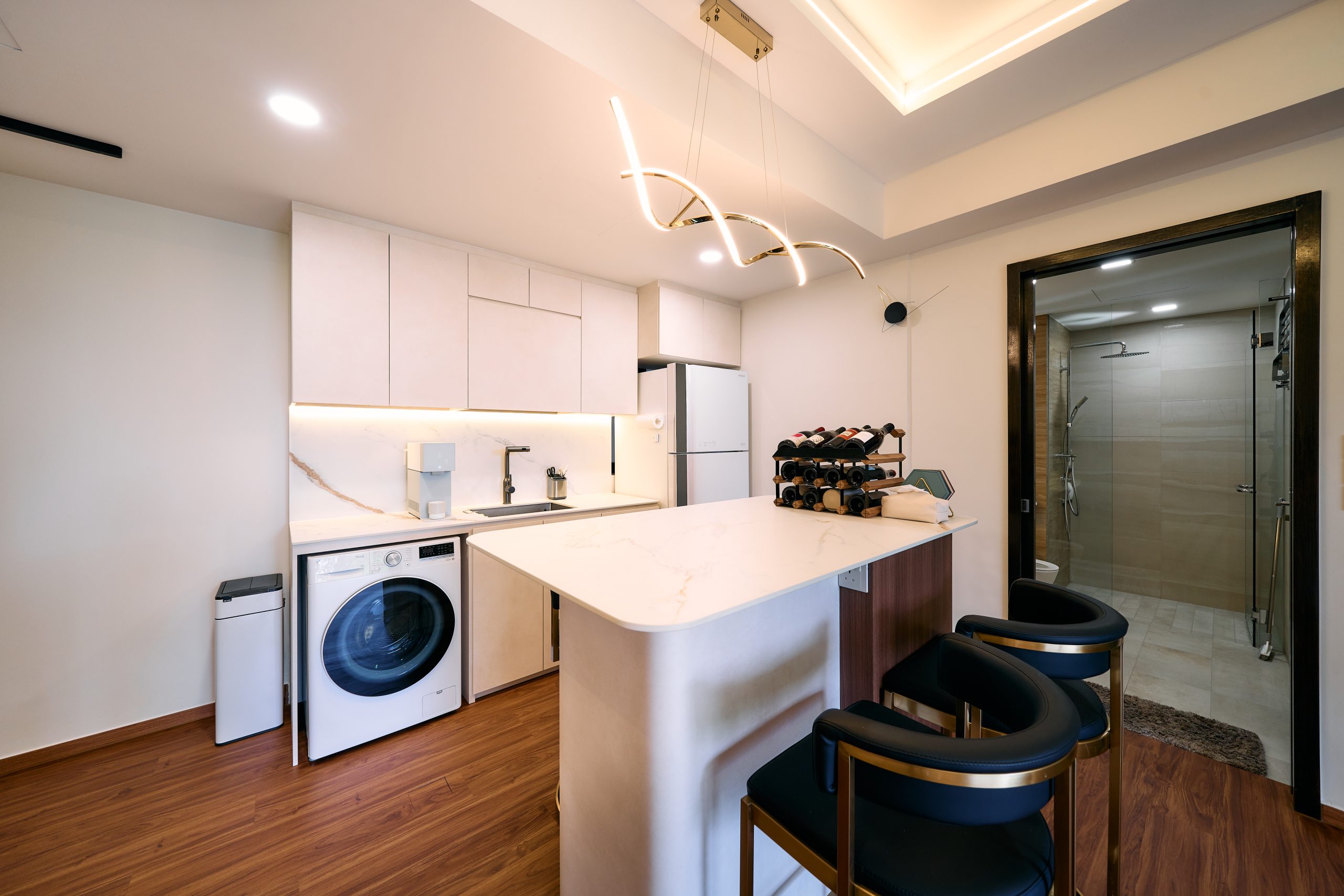
Kitchen Renovation Singapore: Design Ideas, Layouts, and Cost Guide
1. The Singapore Kitchen Landscape: HDB, BTO, and Condo Considerations
A kitchen renovation in Singapore is a strategic investment in your home’s functionality and value. Given the unique housing environment, particularly the prevalence of HDB flats, careful planning is essential due to space constraints and strict regulations.
Whether you own a new BTO flat, a resale HDB, or a private condominium, your renovation journey is shaped by the size, structure, and specific regulatory constraints of your property. HDB owners must adhere to strict guidelines regarding hacking walls, wet works, and materials like the cement mortar base for cabinets . Condo owners must comply with management corporation strata title (MCST) by-laws and submit plans for approval.
The goal of any Kitchen Renovation Singapore project is to maximise efficiency and storage while maintaining aesthetic appeal. Thoughtful design, such as the minimalist and nature-inspired principles of Japandi and Wabi-Sabi, can truly shine in compact Singapore spaces.
2. Decoding the Costs: A Comprehensive Kitchen Renovation Singapore Price Guide

Understanding the financial commitment is the first and most critical step. The cost of a kitchen renovation in Singapore can vary dramatically, ranging from a modest S$5,000 for a light refresh to over S$30,000 for a complete, high-end overhaul .
Factors Influencing Your Budget
Several key variables will determine the final price tag of your HDB kitchen renovation cost or condo project:
•Scope of Work: Are you doing a simple cabinet replacement and countertop change (light renovation), or a full-scale overhaul involving hacking, re-tiling, and re-wiring (extensive renovation)?
•Property Type and Size: A 3-room HDB flat will naturally cost less to renovate than a large condominium kitchen due to sheer size and complexity.
•Material Selection: Premium materials like natural stone countertops and high-end European appliances will significantly increase the budget compared to laminates and standard local brands.
•Design Complexity: Custom carpentry, intricate detailing, and complex layouts (like adding a kitchen island) require more skilled labour and materials.
•Contractor vs. Interior Designer (ID): Hiring an ID, while offering a cohesive design vision and project management, typically comes at a higher cost than engaging a direct contractor.
Cost Breakdown by Component
A typical kitchen renovation budget is allocated across several major categories. The following table provides a general estimate for a moderate-scale HDB kitchen renovation:
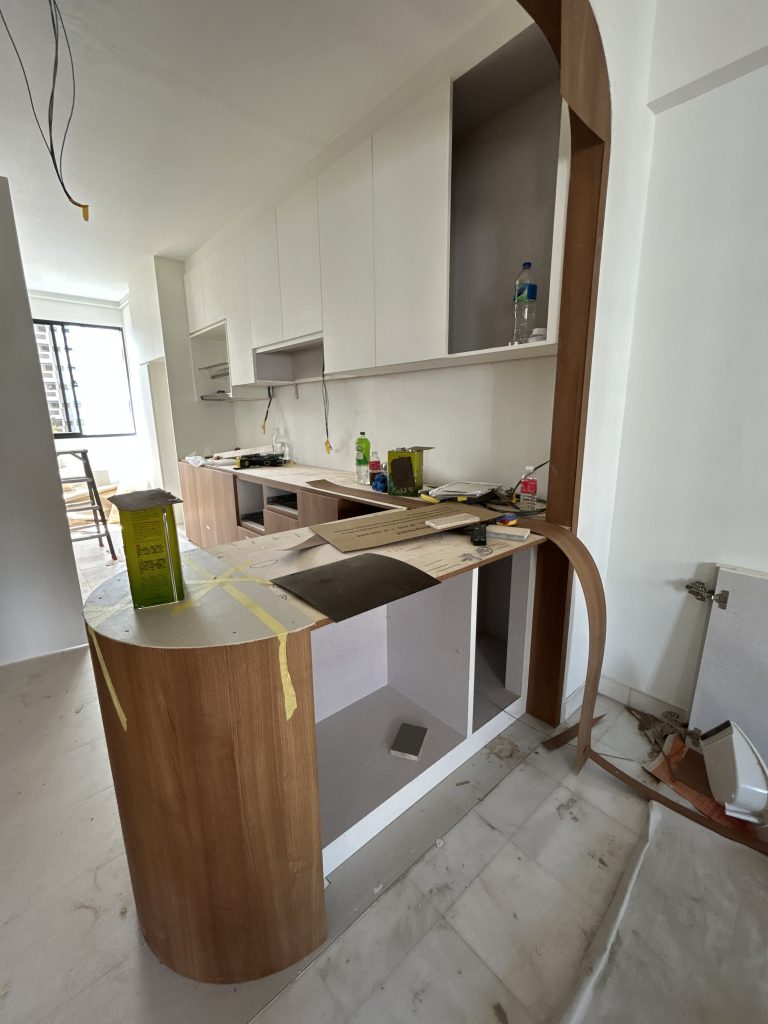
| Component | Estimated Cost Range (SGD) | Percentage of Total Budget | Notes |
| Hacking & Demolition | S$500 – S$2,000 | 2% – 5% | Removal of existing cabinets, tiles, and fixtures. |
| Wet Works (Tiling & Masonry) | S$3,000 – S$8,000 | 15% – 25% | New floor and wall tiles, cement screeding, and cabinet bases. |
| Carpentry (Cabinets & Storage) | S$6,000 – S$15,000 | 30% – 45% | The largest expense. Cost depends on material, finish, and length. |
| Countertop | S$1,500 – S$4,000 | 5% – 12% | Quartz and solid surface are popular choices. |
| Plumbing & Electrical | S$1,500 – S$3,500 | 5% – 10% | Re-routing pipes, installing new power points, and lighting. |
| Appliances & Fixtures | S$3,000 – S$8,000 | 15% – 25% | Cooker hob, hood, oven, sink, tap, and lighting fixtures. |
| Total Estimated Range | S$15,500 – S$40,500 | 100% | This is a broad estimate and can vary based on property size and material choices. |
Estimated Renovation Costs by Property Type (HDB vs. Condo)
The cost difference between HDB and condo renovations is primarily driven by size and the extent of hacking permitted.
| Property Type | Scope | Estimated Kitchen Renovation Cost (SGD) |
| 3-Room HDB BTO | Moderate | S$15,000 – S$25,000 |
| 4/5-Room HDB BTO | Moderate | S$20,000 – S$35,000 |
| HDB Resale (Full Overhaul) | Extensive | S$30,000 – S$50,000+ |
| Condominium (Mid-Sized) | Moderate to Extensive | S$35,000 – S$60,000+ |
Pro-Tip: Always allocate a contingency fund of 10% to 15% of your total budget for unforeseen issues, which are common in older resale HDB flats.
3. Mastering Kitchen Layouts for Singapore Homes
The layout of your kitchen dictates its workflow and efficiency. In space-constrained Singapore, choosing the right layout is crucial for a successful Kitchen Renovation Singapore. The goal is to adhere to the “kitchen work triangle” principle, which ensures the sink, refrigerator, and cooking area are easily accessible to one another.
The Classic: L-Shaped Kitchen

The L-shaped layout is popular for HDB and BTO flats, featuring cabinets and appliances along two adjacent walls.
•Pros: Excellent for small to medium spaces, ample counter space, allows for a small dining area.
•Cons: Corner cabinets can be hard to access without clever storage solutions (e.g., lazy susans).
The Efficient: Galley Kitchen
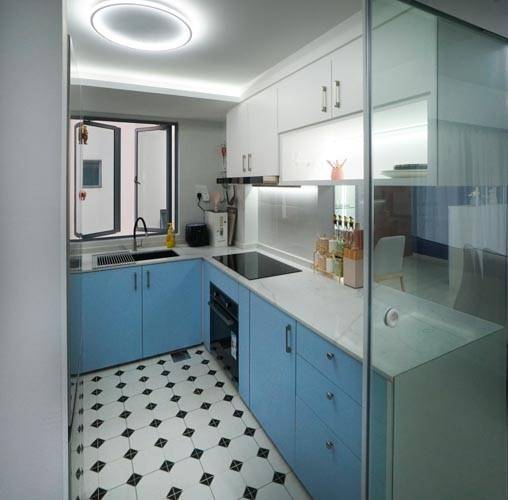
A galley kitchen consists of two parallel runs of cabinets and countertops, common in older HDB flats and smaller condo units.
•Pros: Maximises storage and counter space in a narrow area, excellent workflow.
•Cons: Can feel cramped if the passage is too narrow, limited space for dining.
The Social: U-Shaped and Island Kitchens

The U-shaped layout uses three walls for cabinets and appliances, offering maximum storage. An island kitchen, for larger condo units, incorporates a central, freestanding unit.
•Pros: Maximum storage (U-shaped), ideal for entertaining (Island).
•Cons: Requires a large floor area, an island can obstruct the work triangle if not planned correctly.
Optimising Small HDB Kitchens
For the typical compact HDB kitchen, focus on vertical storage and multi-functional elements:
1.Go Vertical: Install cabinets that reach the ceiling to maximise storage.
2.Open Shelving: Use a few open shelves to make the space feel less enclosed and provide easy access.
3.Slim Appliances: Opt for slim-profile refrigerators, induction hobs, and combination microwave-ovens to save counter space.
4.Pull-Out Systems: Invest in high-quality pull-out pantry systems and magic corners to make every inch of cabinet space usable.
4. Design Ideas: Embracing Japandi and Wabi-Sabi with Interior Diary
At Interior Diary, we specialise in creating serene, timeless spaces that resonate with the Singaporean desire for calm amidst the urban bustle. Our expertise lies in the harmonious blend of Japanese and Scandinavian aesthetics—Japandi kitchen Singapore—and the profound, nature-inspired philosophy of Wabi-Sabi. These styles are perfectly suited for the modern Singapore home, promoting decluttering, natural light, and a sense of peace.
The Serene Blend: Japandi Kitchen Design

Japandi is the marriage of Japanese minimalism (clean lines, functional design) and Scandinavian hygge (warmth, comfort, natural materials). The result is a kitchen that is both sleek and inviting.
Key Japandi Elements:
•Colour Palette: Muted, neutral tones. Think soft whites, light greys, beige, and plenty of natural wood. Black is used sparingly for sharp, intentional accents (e.g., tapware, cabinet handles).
•Clean Lines: Flat-panel cabinetry (Shaker-style is too busy) with minimal or integrated handles. Everything is streamlined and purposeful.
•Natural Wood: Light-coloured woods like oak or ash are preferred, bringing Scandinavian warmth. The wood grain is visible but not overly rustic.
•Functionality: Every item has a place. Open shelving is used to display curated, beautiful items, not clutter.
The Beauty of Imperfection: Wabi-Sabi Kitchen Design

Wabi-Sabi is a Japanese philosophy that finds beauty in imperfection, transience, and the natural cycle of growth and decay. A Wabi-Sabi kitchen design is a celebration of authenticity and texture.
Key Wabi-Sabi Elements:
•Texture and Patina: Embracing materials that age gracefully. Think unpolished concrete, rough-hewn wood, hand-thrown ceramics, and metals that develop a patina over time.
•Earthy Tones: The colour palette is deeper and more organic than Japandi, featuring browns, terracotta, deep greens, and charcoal.
•Asymmetry and Irregularity: Unlike the strict symmetry of modern design, Wabi-Sabi welcomes slight imperfections—a slightly uneven countertop, a handmade tile backsplash, or a uniquely shaped wooden bowl.
•Connection to Nature: A strong emphasis on raw, natural materials. The goal is to create a space that feels grounded and tranquil.
Key Materials and Finishes for a Japandi/Wabi-Sabi Kitchen
To achieve these looks in your Kitchen Renovation Singapore, focus on these material choices:
| Component | Japandi Style | Wabi-Sabi Style |
| Cabinetry | Light oak or ash wood veneer; matte white or light grey laminate; integrated handles. | Reclaimed wood; textured, rough-sawn finishes; dark, earthy wood stains; simple, aged brass handles. |
| Countertops | Light-coloured quartz or solid surface; seamless integration with the backsplash. | Honed or unpolished natural stone (e.g., granite, marble); concrete or micro-cement; visible, subtle imperfections. |
| Backsplash | Large format, matte tiles in a neutral colour; subtle texture; white subway tiles with minimal grout lines. | Handmade, irregular ceramic tiles; textured plaster or limewash paint; exposed brick or concrete. |
| Flooring | Light wood-look vinyl or large-format light grey/beige tiles. | Darker, textured tiles; concrete screed; natural stone. |
| Fixtures | Matte black or brushed stainless steel; minimalist, geometric shapes. | Aged brass or bronze; organic, curved shapes; simple, functional designs. |
5. Navigating HDB, BTO, and Condo Renovation Regulations
Renovating in Singapore requires strict adherence to local regulations, especially for HDB flats. Failing to comply can result in fines, mandatory rectification, and significant delays.
HDB Renovation Rules You Must Know
The Housing & Development Board (HDB) has specific rules to ensure structural integrity and neighbour harmony.
Structural Works (Require HDB Permit):
•Hacking Walls: You can only hack non-structural walls. Any wall that is load-bearing, a column, or a beam is strictly off-limits. You must engage a Registered Renovation Contractor (RRC) who will apply for the permit on your behalf .
•Changing the Main Entrance Door/Gate: Requires a permit if you are altering the size or location.
•Modifying the Refuse Chute: Any alteration to the refuse chute hopper is prohibited.
Wet Works and Fixtures (Subject to Guidelines):
•Cement Mortar Base: For kitchen cabinets and countertops, the total thickness of the cement mortar base and tile finishes is not allowed to exceed 50mm . This is a crucial detail for ensuring the longevity of your carpentry.
•Weepholes: If your kitchen has a sanitary duct with a weephole (to alert residents of leaks), it must not be sealed or blocked by kitchen carpentry or fixtures.
•Wet Areas: For new BTO flats, there is a 3-year restriction period on removing the wall and floor finishes in the wet areas (kitchen and bathrooms) to allow the waterproofing membrane to cure fully.
Condo and Private Property Guidelines
While generally less restrictive than HDB, condo renovations are governed by the MCST.
•Permit Submission: All renovation plans must be submitted to the MCST for approval before work begins. This process ensures compliance with building codes and minimizes disruption to other residents.
•Working Hours: Condos have very strict rules on renovation working hours (typically 9:00 AM to 5:00 PM on weekdays, with no work allowed on weekends or public holidays).
•Common Areas: Protection of common areas (lifts, corridors) is mandatory, and a refundable security deposit is usually required.
•Structural Changes: Any structural changes, such as removing a kitchen wall to create an open-concept space, will require approval from the Building and Construction Authority (BCA) and a Professional Engineer (PE).
6. Choosing the Right Materials: Durability Meets Design
Countertops: Quartz, Solid Surface, and Laminate
| Material | Pros | Cons | Best For |
| Quartz | Highly durable, non-porous, stain-resistant, wide range of colours. | Expensive, visible seams, can be damaged by extreme heat. | High-traffic kitchens, modern and Japandi designs. |
| Solid Surface | Seamless integration with sink, repairable, non-porous, cost-effective. | Less heat-resistant than quartz, can scratch easily. | Budget-conscious, seamless integration (e.g., Wabi-Sabi concrete look). |
| Laminate | Most affordable, easy to clean, good for light use. | Not heat or scratch-resistant, prone to water damage over time. | Quick refreshes, rental properties. |
Cabinetry: Plywood, MDF, and Finishes
The carcass (the main body) of your cabinets should be made of a durable, moisture-resistant material. Plywood is the gold standard for Singapore kitchens, being strong, stable, and highly resistant to moisture. MDF is cheaper but highly susceptible to water damage.
For the finish, Laminates are the most popular choice due to their affordability, durability, and vast range of colours and textures. Veneer offers the authentic look of natural wood, perfect for the Japandi aesthetic, but requires more maintenance. Glass/Metal can be used for accent cabinets.
Flooring and Backsplashes
For flooring, tiles are the most practical choice in Singapore due to their water resistance and ease of cleaning. Large-format tiles in neutral colours (light grey, beige) are excellent for making a small kitchen appear larger and fit seamlessly into a Japandi design.
For the backsplash, consider: Subway Tiles for a timeless, minimalist look; Textured Tiles for the organic charm of Wabi-Sabi kitchen design; or a Glass Backsplash for a sleek, easy-to-clean surface.
7. The Renovation Process: A Step-by-Step Timeline
A typical kitchen renovation in Singapore takes between 4 to 8 weeks. A well-managed project follows this general timeline:
| Phase | Duration | Key Activities |
| Phase 1: Planning & Approval | 1–2 Weeks | Finalise design, select materials, sign contract, submit HDB/MCST permits. |
| Phase 2: Hacking & Demolition | 1–3 Days | Dismantle old cabinets, hack existing tiles/walls (if applicable). |
| Phase 3: Wet Works & Plumbing | 1–2 Weeks | Lay new floor/wall tiles, construct cement bases, re-route plumbing and electrical points. Allow time for cement to cure. |
| Phase 4: Ceiling & Painting | 3–5 Days | Install false ceiling, plastering, and initial coats of paint. |
| Phase 5: Carpentry Installation | 3–7 Days | Install custom cabinets and drawers. |
| Phase 6: Countertop Installation | 1 Day | Install the countertop (after carpentry for a perfect fit). |
| Phase 7: Final Fixtures & Touch-ups | 2–3 Days | Install sink, tap, cooker hob/hood, lighting, and final electrical switches. |
Actionable Tip: Custom carpentry and countertop fabrication have the longest lead times. Finalise these designs early to avoid project delays.
8. Why Choose Interior Diary for Your Kitchen Renovation Singapore?
Choosing the right interior design firm is crucial. At Interior Diary, we craft bespoke living spaces that reflect your personal philosophy and lifestyle.
Our Unique Value Proposition:
•Specialisation in Japandi and Wabi-Sabi: We are pioneers in bringing the serene, sophisticated aesthetics of Japandi kitchen Singapore and Wabi-Sabi kitchen design to the local market, translating these styles into practical, space-saving solutions perfect for HDB and condo living.
•Local Expertise: We possess in-depth knowledge of HDB and MCST regulations, ensuring your renovation is compliant from day one. We manage all permit applications and structural considerations.
•Transparent Costing: Our detailed quotations provide a clear breakdown of your HDB kitchen renovation cost, with no hidden fees.
•End-to-End Project Management: Our dedicated project managers oversee every stage, ensuring timely completion and superior workmanship.
9. Ready to Begin Your Kitchen Transformation?
Your dream kitchen, a tranquil, functional, and beautifully designed space, is within reach. Whether you are drawn to the clean lines of Japandi or the organic textures of Wabi-Sabi, Interior Diary is here to guide you through every step of your Kitchen Renovation Singapore journey.
Don’t wait to start planning your perfect kitchen. Contact us today for your free quotation.